
Natural Ways to Clean Grout with Vinegar and Baking Soda: An Atlanta Homeowner's Guide
Discover how to restore your tile's original beauty using simple household ingredients while navigating the unique humidity and red clay challenges of living in Metro Atlanta.

Natural Ways to Clean Grout with Vinegar and Baking Soda: The Ultimate Atlanta Guide
If you live in a historic bungalow in Cabbagetown or a modern high-rise overlooking the Beltline, you know that Atlanta’s humidity and red clay have a way of finding their way into every crevice of your home. The biggest victim? Your tile grout. Over time, that crisp white or light gray line turns a murky shade of 'Georgia Red.' Many homeowners are ditching harsh chemicals in favor of natural ways to clean grout with vinegar and baking soda, seeking a solution that is safe for pets, kids, and the environment.
In this guide, we will break down exactly how to use these kitchen staples to lift deep-seated dirt, why this combination works, and when the red clay stains might require a professional touch from a local cleaning service.
Why Grout Gets So Dirty in Metro Atlanta
Before we dive into the scrubbing, it’s important to understand the enemy. Grout is incredibly porous—think of it like a hard sponge. In the Southeast, we deal with two specific culprits: moisture and minerals.
The Humidity Factor
In neighborhoods like Virginia-Highland or Old Fourth Ward, the older homes often struggle with bathroom ventilation. When you combine Atlanta’s 80% humidity with a steamy shower, grout becomes a breeding ground for mildew. If left untreated, those black spots won't just look bad; they can actually degrade the integrity of the grout.
The Red Clay Menace
If you have a dog that loves running around Piedmont Park or kids playing in a backyard in Marietta, you know the red clay struggle. This iron-rich soil is notoriously difficult to remove once it settles into the pores of your grout. Traditional mopping often just pushes the clay-tinted water into the grout lines, staining them permanently over time.
The Science: How Vinegar and Baking Soda Work Together
You likely remember the science fair volcanoes from your school days. When you combine baking soda (a base) and vinegar (an acid), they react to create carbon dioxide gas. This bubbling action is more than just a show; it physically helps loosen the dirt trapped in the microscopic pits of the grout.
Baking Soda as a Mild Abrasive
Baking soda is soft enough not to scratch your ceramic or porcelain tiles but gritty enough to provide the mechanical friction needed to lift surface stains. It’s also a natural deodorizer, which is great for kitchen floors in Midtown condos where cooking smells can linger.
Vinegar as a Degreaser
The acetic acid in white vinegar helps break down soap scum and mineral deposits left behind by Atlanta’s municipal water. However, a word of caution: vinegar should never be used on natural stone like marble or travertine, which are common in high-end Buckhead renovations. The acid can etch the stone, leaving permanent dull spots.
Step-by-Step: Natural Ways to Clean Grout with Vinegar and Baking Soda
To get professional-level results at home, you need to follow a specific process. Don't just dump them on the floor and hope for the best.
1. The Prep Work
Sweep or vacuum the area thoroughly. In a city like Atlanta, pollen season (the 'Yellow Blur') means your floors are covered in fine dust that will turn into a sticky paste if you add liquid immediately. Clear the area of all rugs and furniture.
2. Apply the Baking Soda Paste
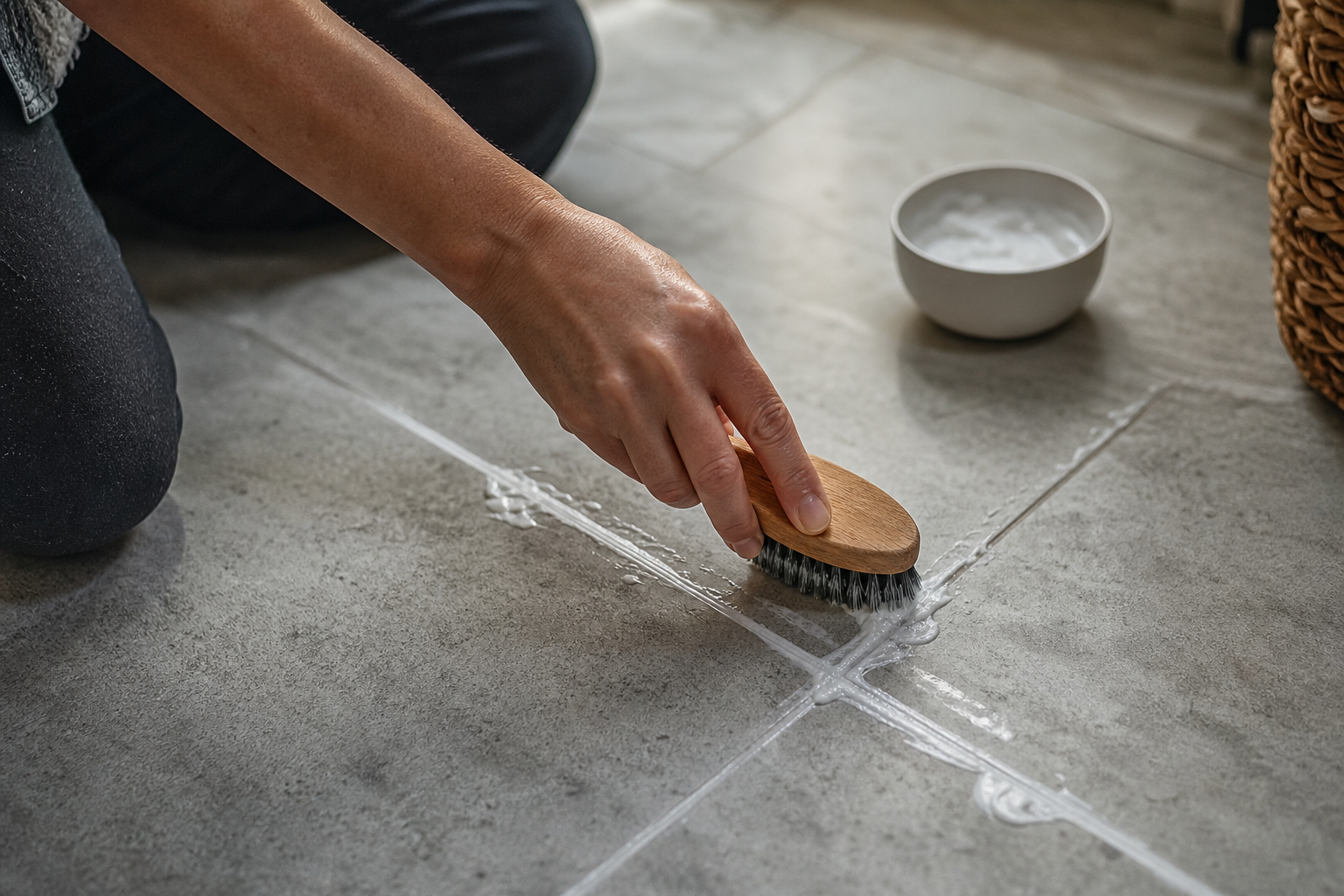
Mix baking soda with a small amount of water to create a thick paste, roughly the consistency of toothpaste. Spread this along your grout lines using a gloved finger or a small spatula. Let it sit for at least 15 minutes. This gives the alkaline properties time to work on organic stains.
3. The Vinegar Spritz
Fill a spray bottle with a 50/50 mix of white vinegar and warm water. Spray this directly onto the baking soda paste. You’ll see the immediate bubbling reaction. Let the 'fizz' do its work for about 5 to 10 minutes.
4. Scrubbing Techniques
Use a stiff-bristled grout brush or even an old electric toothbrush. Scrub in circular motions. For those stubborn spots where the Georgia red clay has really settled in, you may need to apply a second round of the paste.
5. Rinse and Dry
This is the most important step. Wipe away the residue with a damp microfiber cloth, then mop the entire floor with clean water. If you leave baking soda behind, it will dry into a white film that makes your floors look duller than they were before you started.
Expert Cleaning Tips for Atlanta Homes
- Temperature Matters: Use hot water in your vinegar mix. The heat helps open the pores of the grout, allowing the solution to penetrate deeper.
- Zoned Cleaning: Don't try to do the whole kitchen at once. Work in 3x3 foot sections so the vinegar doesn't dry before you have a chance to scrub.
- Hydrogen Peroxide Boost: If your grout is white and the vinegar isn't cutting it, swap the water in your baking soda paste for hydrogen peroxide. This creates a natural bleaching agent that is safer than chlorine bleach.
- Ventilation: Even though these are natural ingredients, the smell of vinegar can be pungent. Open the windows to let in that sweet Atlanta breeze (unless it's peak pollen season).
Common Mistakes to Avoid
- Using Vinegar on Natural Stone: As mentioned, if you have marble, granite, or slate tiles, stay away from vinegar. Use a pH-neutral cleaner instead.
- Using Metal Brushes: Never use a wire brush. It can strip the grout out entirely or scratch the finish on your tiles.
- Skipping the Sealant: Once you’ve gone through the effort of cleaning, you must seal the grout. Without a sealer, those pores are wide open to soak up the next spill or muddy footprint.
- Ignoring the Rinse: If your floors feel 'gritty' after cleaning, you didn't rinse enough. Baking soda is a powder; it needs plenty of water to be fully removed.
When to Call a Professional
Sometimes, DIY isn't enough. If your grout is crumbling, if the stains are deep-set mildew that won't budge, or if you simply don't have the six hours required to scrub your entire ranch home in Sandy Springs, it's time to look at professional pricing.
The Cost of Professional Grout Cleaning in Atlanta
In the Metro Atlanta area, professional tile and grout cleaning usually ranges from $150 to $450 depending on the square footage and the level of staining. A professional service uses high-pressure steam and specialized alkaline cleaners that reach depths a toothbrush simply can't. If you're moving into a new place in Inman Park or getting a home ready for sale in Alpharetta, a professional deep clean can make the floors look brand new for a fraction of the cost of replacement.
Conclusion
Learning natural ways to clean grout with vinegar and baking soda is a fantastic skill for any Atlanta homeowner looking to maintain a healthy, chemical-free environment. It’s cost-effective, environmentally friendly, and surprisingly satisfying when you see that original color emerge from under the grime. Whether you’re tackling a small bathroom or a large sunroom, patience and the right technique are your best tools. However, if the red clay has won the battle, don't hesitate to reach out to the pros to restore your home's fire and freshness.

Frequently Asked Questions
Q.How often should I clean my grout in Atlanta?
Due to the high humidity and red clay soil in Metro Atlanta, we recommend a deep scrub of your grout lines every 3 to 6 months. High-traffic areas like entryways and mudrooms may need attention more frequently, especially during the rainy spring season.
Q.Can I use apple cider vinegar instead of white vinegar?
It is best to stick with distilled white vinegar. Apple cider vinegar has a brown tint and contains natural sugars that could potentially stain light-colored grout or leave a sticky residue that attracts more dirt.
Q.Will vinegar and baking soda damage my grout over time?
If used occasionally, this combination is safe for most sanded and unsanded grouts. However, because vinegar is acidic, using it every single day could slowly weaken the grout structure. Always ensure your grout is properly sealed to prevent erosion.
Q.Why is my grout still dark even after scrubbing with baking soda?
If the stain persists, it might be deep-seated mold or permanent staining from Georgia's iron-rich red clay. In these cases, the pigment has bonded with the grout material, and you may need a professional steam cleaning or a grout colorant to restore the look.
Q.Is it safe to use this method on my marble bathroom floors in Buckhead?
No, you should never use vinegar on natural stone like marble, limestone, or travertine. The acid will cause 'etching,' which looks like dull spots or white marks that cannot be wiped away. For natural stone, use a specialized pH-neutral stone cleaner.
Ready for a Cleaner Home?
Get a free quote from Fuego Fresh Cleaning Services today. Background-checked, fully insured, ridiculously detail-focused.
Comments
Loading comments…