How to Clean Hardwood Floors Without Streaks: An Atlanta Homeowner’s Guide
Tired of dull, hazy floors? Discover the definitive professional secrets to achieving a streak-free, mirror-like finish on your Atlanta home's hardwood floors today.

How to Clean Hardwood Floors Without Streaks: The Ultimate Atlanta Guide
There is nothing quite like the warmth of genuine hardwood floors in a historic Virginia-Highland bungalow or the sleek, modern wide planks of a Buckhead high-rise. However, that beauty quickly fades when you realize your cleaning efforts are leaving behind a cloudy, hazy residue. If you are wondering how to clean hardwood floors without streaks, you are likely dealing with the unique challenges of the Metro Atlanta environment—from high humidity that slows drying times to the fine layer of yellow pine pollen that seems to penetrate every window seal in the spring.
Streaks aren't just an aesthetic annoyance; they often indicate a buildup of product or improper technique that can eventually damage your floor’s finish. In this guide, we will break down the chemistry of a clean floor, the tools you actually need, and the specific steps to ensure your hardwood looks like it was just finished by a professional.
The Root Cause: Why Do Hardwood Floors Streak?
Before we dive into the method, we have to understand the madness. Most Atlanta homeowners experience streaking due to three primary culprits: too much water, the wrong cleaning solution, or dirty tools.
Excess Moisture and Humidity
In Georgia, our humidity is legendary. If you use a traditional mop and bucket, the water stays on the surface for too long. Instead of evaporating cleanly, the minerals in the water (or the dirt suspended in it) settle into the grain, causing that dreaded milky film. When you are learning how to clean hardwood floors without streaks, the first rule is to use as little liquid as possible.
Chemical Buildup
Many store-bought "shine restorers" contain waxes or silicones. While they look great for twenty minutes, they create a sticky layer that attracts dust and shows every footprint. Over time, these layers stack up, creating a cloudy appearance that resists standard mopping. To fix this, you must strip away the old product and start fresh.
The "Dirty Mop" Syndrome
If you are using a cotton string mop, you are essentially just moving gray water around your home. Once the water in your bucket turns cloudy, you are no longer cleaning; you are painting your floor with diluted dirt. Switching to microfiber is the single biggest upgrade you can make for your home maintenance.
The Step-by-Step Process for Streak-Free Success
Step 1: The Intensive Dry Clean
You cannot get a streak-free finish if there is grit on the floor. In Atlanta, we deal with a lot of red clay soil. If that clay isn't removed before you add liquid, you effectively create a very thin layer of mud. Use a high-quality vacuum with a hard-floor setting (beaters off) or a dry microfiber dust mop to reach deep into the crevices of your planks.
Step 2: Choose the Right Solution
Skip the vinegar. While it’s a popular DIY tip, vinegar is an acid that can eat away at your polyurethane finish over time, making it look dull. Instead, use a pH-neutral hardwood floor cleaner. If you want to go the DIY route safely, a single drop of clear dish soap in a gallon of distilled water is often enough to break surface tension without leaving residue.
Step 3: The "Mist and Microfiber" Technique
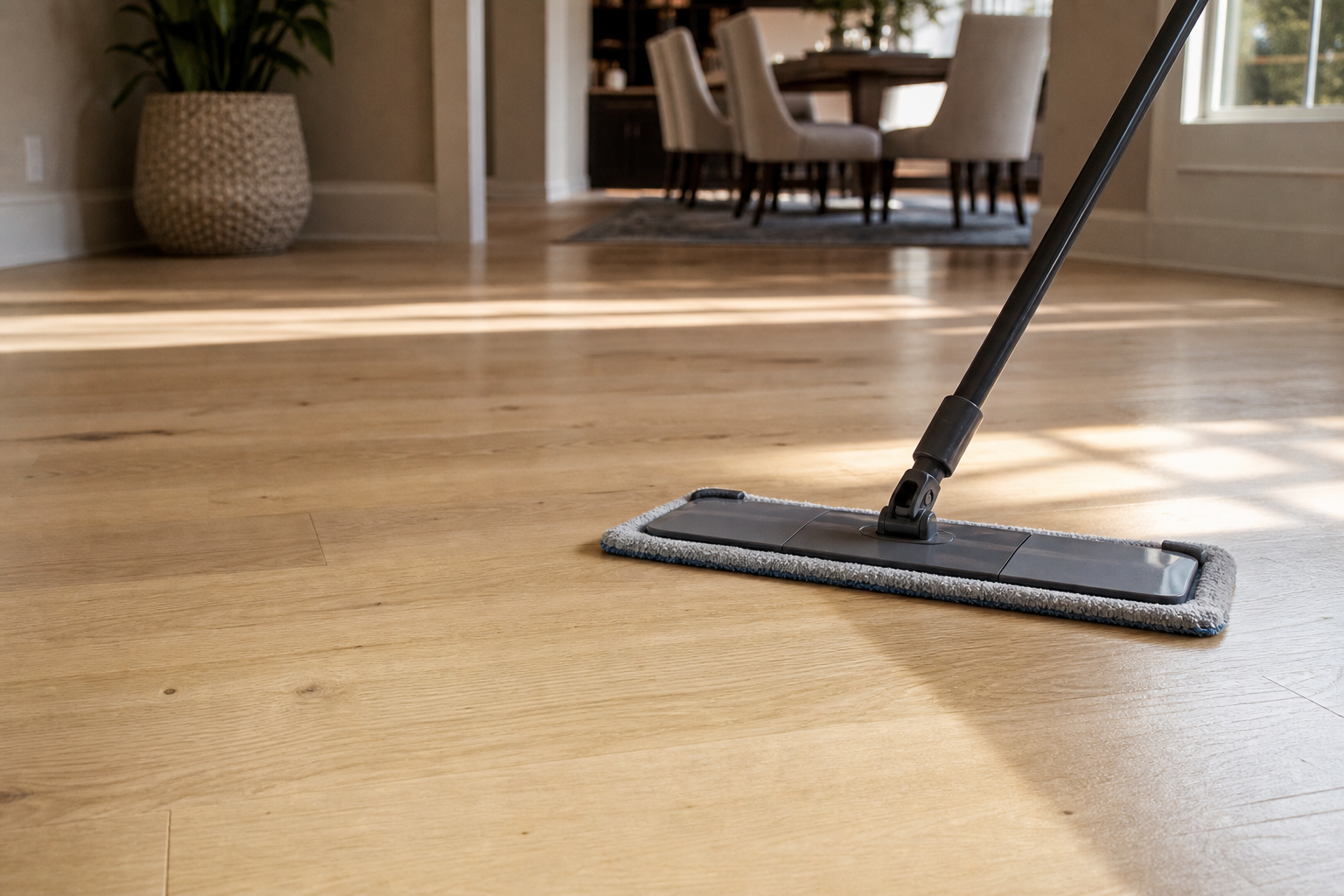
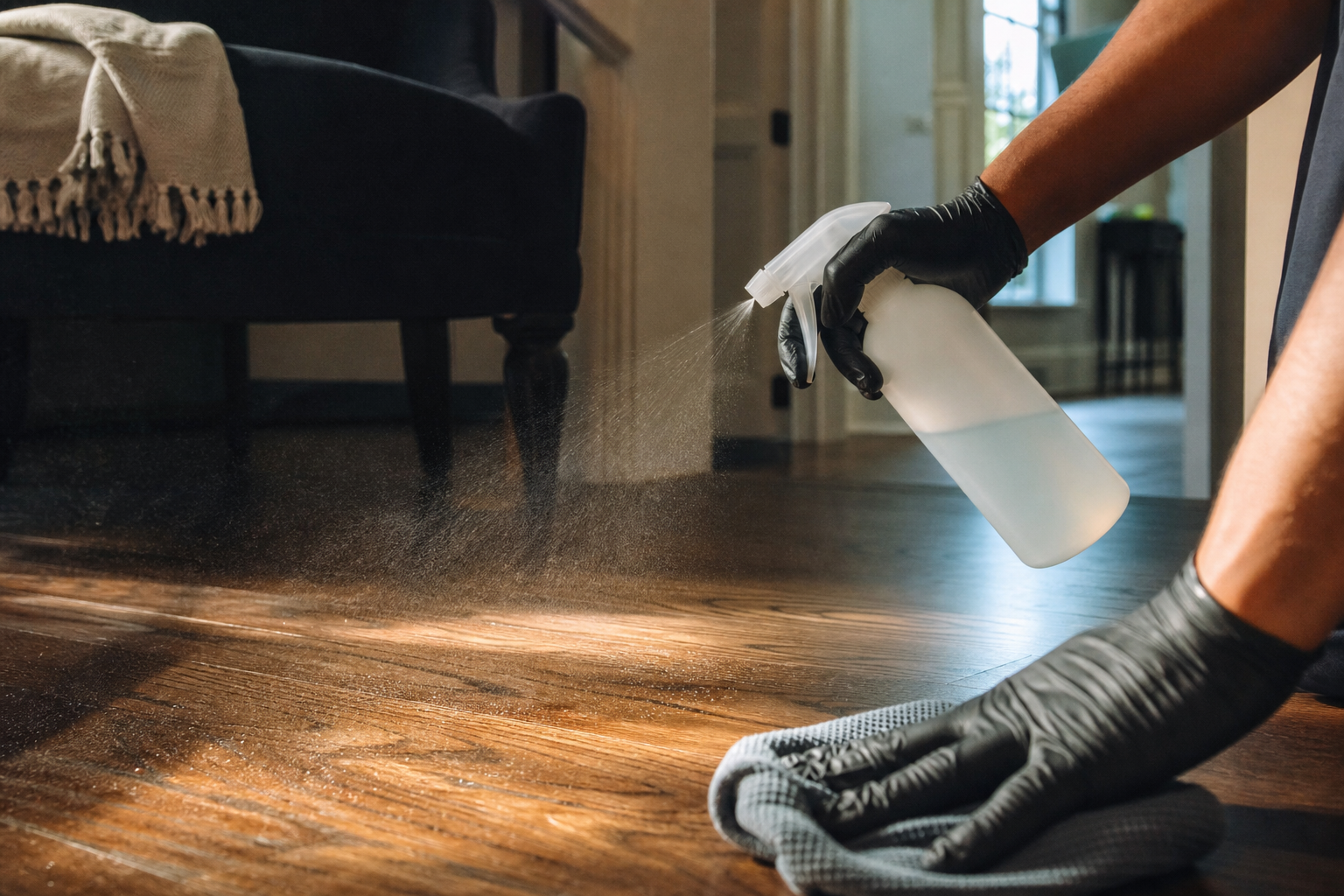
Instead of dunking a mop, use a spray bottle. Lightly mist a 3x3 foot area of the floor. Take a clean, damp (not soaking) microfiber flat mop and work in the direction of the wood grain. Working with the grain ensures that any microscopic marks are hidden by the natural patterns of the wood.
Step 4: The Buffing Secret
This is the step most people skip. If you see any moisture remaining on the floor after your pass, go over it immediately with a completely dry microfiber cloth or a fresh dry mop head. This "buffing" action lifts the final traces of cleaner and prevents water spots from forming as it dries in our humid Georgia air.
Expert Cleaning Tips for Atlanta Hardwood
Manage the Red Clay
If you live near new construction in areas like Westside or Old Fourth Ward, red clay is your enemy. It is highly abrasive. Use heavy-duty walk-off mats at every entrance to catch the grit before it reaches your hardwoods.
Distilled Water is Key
Atlanta’s tap water contains minerals that can leave behind a white film once the water evaporates. If you are struggling with streaks despite using the right cleaner, try switching to distilled water for your mopping solution. It makes a massive difference in the clarity of the finish.
Control Your Climate
Keep your HVAC system running comfortably. High humidity inside the home (above 55%) prevents cleaning solutions from evaporating quickly, which is a leading cause of streaks. On the flip side, during our dry Atlanta winters, using a humidifier can prevent your wood planks from shrinking and creating gaps where dirt hides.
Common Mistakes to Avoid
- Steam Mops: Never use steam on hardwood. The heat and pressure can force moisture deep into the wood fibers, causing warping, cupping, and peeling of the finish.
- Over-Saturation: If you can see standing water, you've used too much. Wood is porous; even sealed wood has cracks where water can seep in.
- Oil Soaps: Products marketed as "oil soaps" often leave a heavy residue that is extremely difficult to remove without professional-grade stripping agents.
- One-Mop-Per-House: If you live in a larger home in neighborhoods like Chastain Park or Druid Hills, one microfiber pad isn't enough. Change your pad every room to ensure you aren't redepositing oils and dirt.
When to Call the Professionals
Sometimes, despite your best efforts, the floors remain dull. This is usually due to years of improper wax buildup or deep-seated oils that a consumer-grade mop simply cannot touch. If you have spent hours scrubbing and your floors still look hazy, it might be time for a professional reset.
In the Atlanta area, a professional deep clean for hardwood floors generally ranges from $150 to $450 depending on the square footage and the level of buildup. This service typically involves a high-speed orbital scrubber and specialized alkaline cleaners that safely lift away years of residue, followed by a professional-grade pH balancer.
If you would rather spend your Saturday walking the Beltline or exploring Ponce City Market than fighting with a mop, Fuego Fresh Cleaning Services is here to help. We specialize in the specific needs of Atlanta homes, ensuring your hardwood floors shine exactly the way they were intended to—without a streak in sight.

Frequently Asked Questions
Q.Can I use vinegar and water on my Atlanta hardwood floors?
We generally advise against it. While vinegar is a natural cleaner, its acidity can break down the polyurethane finish over time, leading to a dull appearance that mimics streaking. A pH-neutral cleaner specifically formulated for wood is a much safer bet for Georgia homes.
Q.Why does my floor look cloudy even after I just cleaned it?
This is likely due to product buildup from 'quick shine' cleaners or oil-based soaps. These products leave a residue that attracts dust and reflects light poorly. You may need a professional deep clean to strip these layers away and restore the original finish.
Q.How often should I clean my floors during Atlanta's pollen season?
During the peak of pollen season, we recommend dry-dusting or vacuuming daily to prevent the abrasive yellow dust from scratching your finish. For damp mopping, once a week is usually sufficient if you are using the 'mist and microfiber' method.
Q.Is a steam mop safe for my hardwood floors?
No, steam mops are not recommended for hardwood. The high pressure can drive moisture into the wood grain, which can cause the planks to swell, buckle, or eventually rot, especially in the high humidity we experience in Metro Atlanta.
Q.What is the best type of mop for avoiding streaks?
A flat microfiber mop is the gold standard. Unlike string mops, microfiber picks up and holds onto dirt rather than spreading it around. It also requires very little water, which is the key secret to a streak-free finish.
Ready for a Cleaner Home?
Get a free quote from Fuego Fresh Cleaning Services today. Background-checked, fully insured, ridiculously detail-focused.
Comments
Loading comments…