
Natural Kitchen Secrets: How to Clean an Oven Without Harsh Chemicals
Discover effective, eco-friendly methods to restore your oven's shine without toxic fumes, perfect for busy Atlanta families who prioritize a healthy, chemical-free home environment.
Natural Kitchen Secrets: How to Clean an Oven Without Harsh Chemicals
There is a specific kind of dread that sets in when you open your oven door and see a layer of charred lasagna drippings and grease buildup staring back at you. If you live in a historic bungalow in Cabbagetown or a modern high-rise in Midtown, you know that a clean home is the foundation of a good life. However, most commercial oven cleaners smell like a laboratory experiment gone wrong. The pungent, eye-stinging fumes can linger in your kitchen for days, which is less than ideal when you’re trying to enjoy the fresh Atlanta air during a rare low-humidity afternoon.
Learning how to clean an oven without harsh chemicals isn't just a trend for the eco-conscious; it is a practical necessity for anyone who wants to avoid breathing in sodium hydroxide or monoethanolamine. In this guide, we will walk you through the most effective, pantry-stable methods to get your appliance sparkling using ingredients you likely already have in your kitchen.
Why Ditch the Traditional Oven Cleaners?
Traditional cleaners are notorious for their caustic nature. They work by dissolving organic matter with high-pH chemicals, but those same chemicals can irritate your lungs, skin, and eyes. In the tight quarters of an Inman Park kitchen, those fumes can quickly become overwhelming.
The Health and Safety Factor
When you use heavy-duty degreasers, you risk leaving behind chemical residue that can vaporize the next time you preheat the oven to 425°F. This can taint the flavor of your food and release volatile organic compounds (VOCs) into your living space. For families with pets or young children, switching to a natural method provides peace of mind that no toxic film is left behind where you prepare your meals.
Protecting Your Appliance
Caustic cleaners can sometimes damage the heating elements or the porcelain enamel lining of high-end appliances. If you’ve invested in a premium range for your Buckhead estate, you want to maintain it with gentler methods that preserve the integrity of the finish while still cutting through the grime.
The Baking Soda and Vinegar Method: The Gold Standard
If you are researching how to clean an oven without harsh chemicals, this is the strategy you will see most often because it actually works. It relies on a simple chemical reaction to lift grease and soften carbonized food.
Step 1: Prepare the Paste
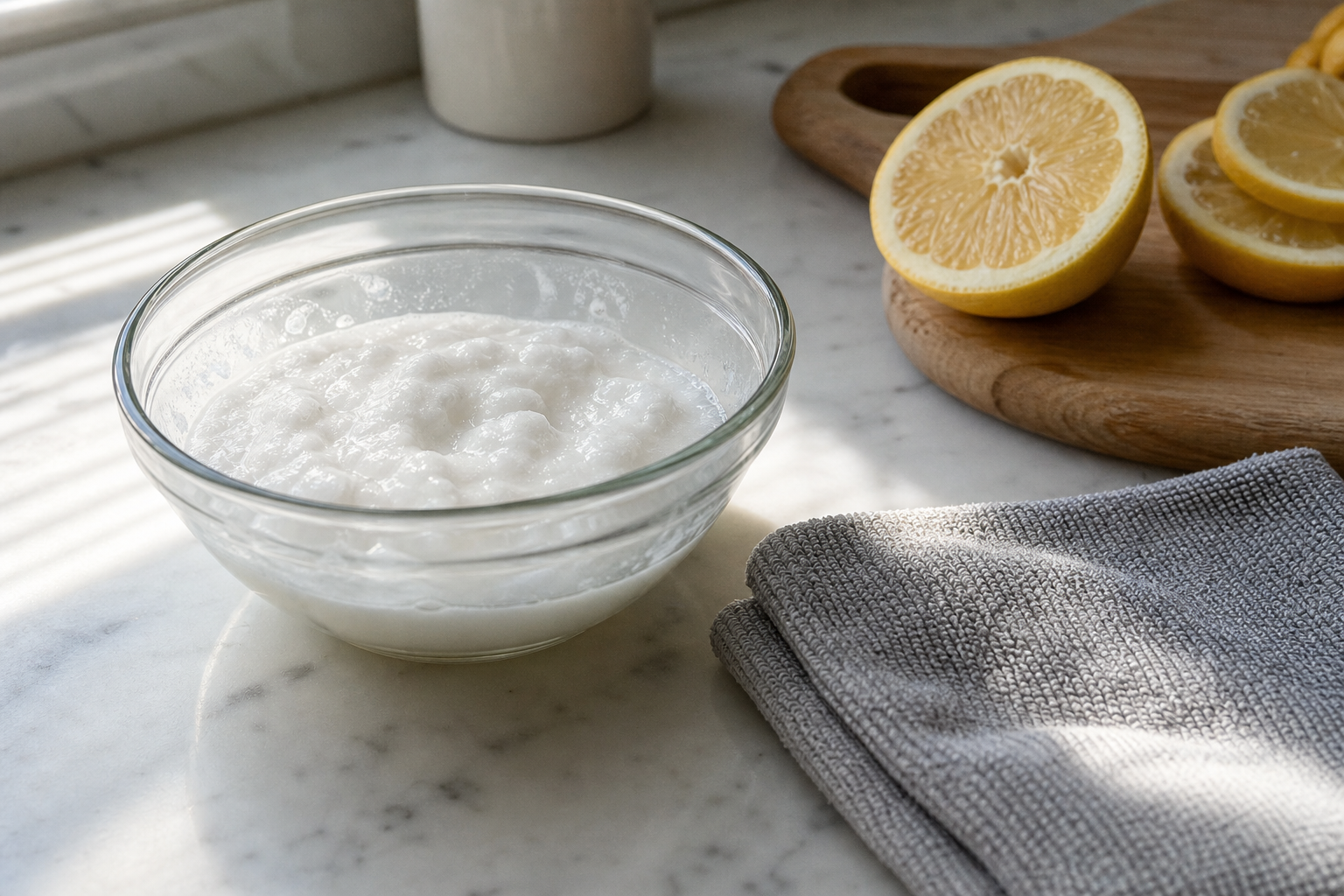
Mix about a half-cup of baking soda with a few tablespoons of water. Adjust the ratio until you have a spreadable paste—think of the consistency of Greek yogurt. For a truly "Atlanta" touch, add a few drops of lemon essential oil to help cut through the heavy smells of Southern cooking.
Step 2: The Application
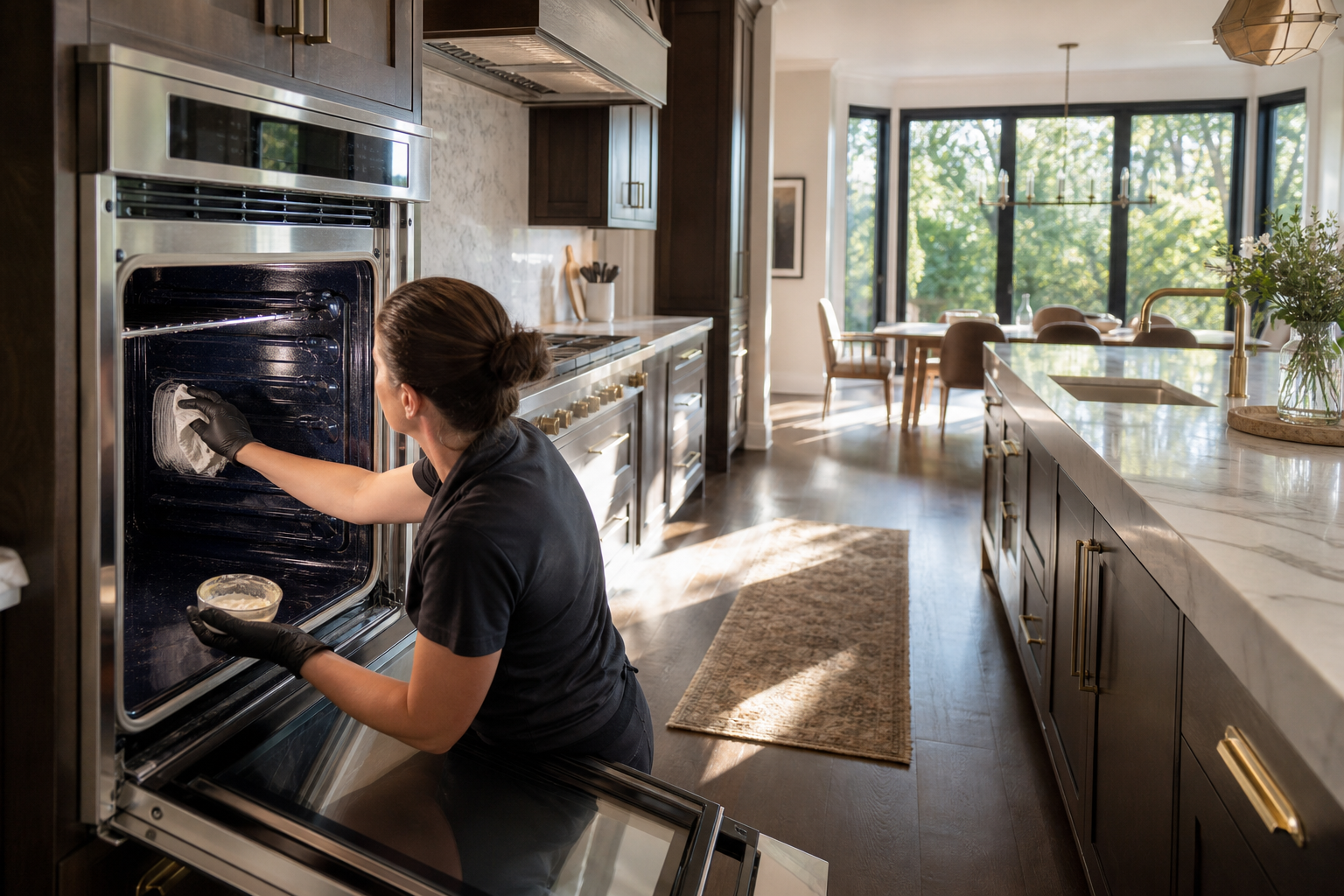
Remove your oven racks and set them aside. Spread the paste all over the interior surfaces of your oven, steering clear of the heating elements. The paste will turn a brownish color as it starts to pull the grease out of the walls. Don't worry if it looks messy; that’s the science happening in real-time.
Step 3: The Waiting Game
This is the most important part: let it sit. For a lightly soiled oven in a Virginia Highland condo, four hours might suffice. For a heavy-duty cleanup, let the paste sit overnight. This gives the alkaline baking soda time to break down the acidic grease.
How to Handle Oven Racks Naturally
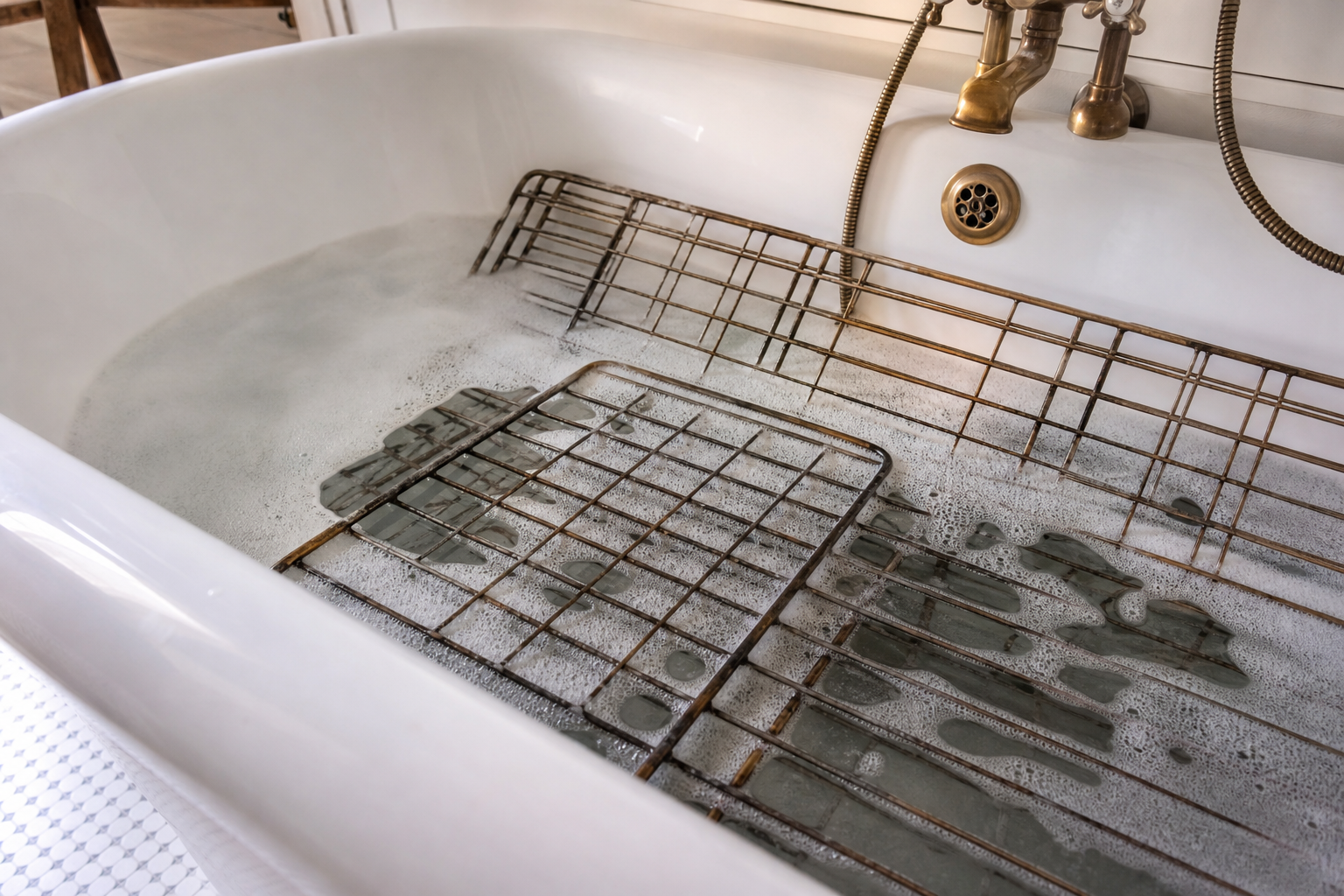
Your oven racks are often the most frustrating part of the process. Their thin wires make scrubbing tedious. Instead of reaching for the wire brush and caustic spray, try the bathtub soak method.
The Soaking Technique
Line your bathtub with old towels to prevent scratching, place the racks on top, and fill the tub with hot water. Dissolve a half-cup of dish soap or a cup of baking soda in the water. Let them soak for several hours. Most of the burnt-on bits will simply slide off with a light sponge-over. This is a great task to start on a Sunday morning before heading out to the Grant Park Farmers Market.
The Power of Steam
If your racks aren't too far gone, you can also use steam. Placing a large pan of water inside the oven at 450°F for 20 minutes can help loosen the grip of the grease before you start your natural scrub. This makes the manual labor significantly easier.
Using Citrus to Cut Through Grease
Lemons are nature’s degreasers. They contain d-limonene, a natural solvent that smells incredible and kills bacteria.
The Lemon Steam Bath
Cut two lemons in half and squeeze the juice into an oven-safe baking dish filled one-third of the way with water. Throw the rinds in the dish too. Place the dish in the oven, turn it on to 250°F, and let it "bake" for 30 minutes. The citrus-infused steam will circulate, softening the gunk on the walls. Once the oven cools slightly, wipe it down with a damp cloth. You’ll find the grease wipes away much faster than with water alone.
Expert Cleaning Tips for Atlanta Homeowners
Maintaining a clean oven in the humid Georgia climate requires a bit of strategy. Here are a few pro-level tips to keep things fresh:
- The Spot Clean: Don't wait for a total disaster. If you're baking a peach cobbler and it bubbles over, wait for the oven to cool and sprinkle a little salt or baking soda on the spill immediately. It will soak up the liquid and prevent it from hardening into a carbon rock.
- The Vinegar Spritz: After you’ve wiped away your baking soda paste, you might see a white residue. Spritz the area with a 50/50 mix of white vinegar and water. The remaining baking soda will foam up, making it easy to wipe away for a streak-free finish.
- Mind the Seals: Use a soft toothbrush dipped in a vinegar-water solution to clean the rubber gaskets around the oven door. Food particles trapped here can cause heat loss and prevent the door from sealing properly.
Common Mistakes to Avoid
Even when using natural methods, there are pitfalls that can lead to a less-than-perfect result or even damage your appliance.
- Ignoring the Heating Elements: Never put your cleaning paste directly on the heating coils or gas igniters. This can cause smoking, unpleasant smells, or even electrical failure.
- Using Abrasive Steel Wool: While it’s tempting to scrub hard, steel wool can scratch the porcelain coating of your oven. Stick to microfiber cloths or non-scratch scouring pads.
- Rushing the Process: Natural cleaning is a marathon, not a sprint. The ingredients need time to react. If you try to wipe the baking soda off after only 20 minutes, you'll end up doing twice the manual scrubbing.
- Forgetting the Glass: People often clean the metal but forget the window. Use the same baking soda paste on the glass, but be extra gentle to avoid micro-scratches that can lead to cracking over time.
When to Call in the Professionals
Sometimes, the buildup is just too much for a DIY afternoon. Whether you've just moved into a new place in Old Fourth Ward and the previous tenants left a mess, or you're preparing for a massive holiday dinner and simply don't have the six hours required for a natural soak, professional help is a valid solution.
Professional deep cleaning for an oven typically involves specialized tools and high-grade eco-friendly degreasers that work faster than home remedies. In the Metro Atlanta area, adding a professional oven cleaning to a standard deep clean service usually falls within a specific price range. You can expect to see pricing for standalone deep kitchen cleanings or add-on oven services ranging from $150 to $450 depending on the size of the unit (standard vs. double oven) and the level of buildup.
If you find yourself overwhelmed, check out our full list of cleaning services to see how we can handle the heavy lifting for you.
Conclusion
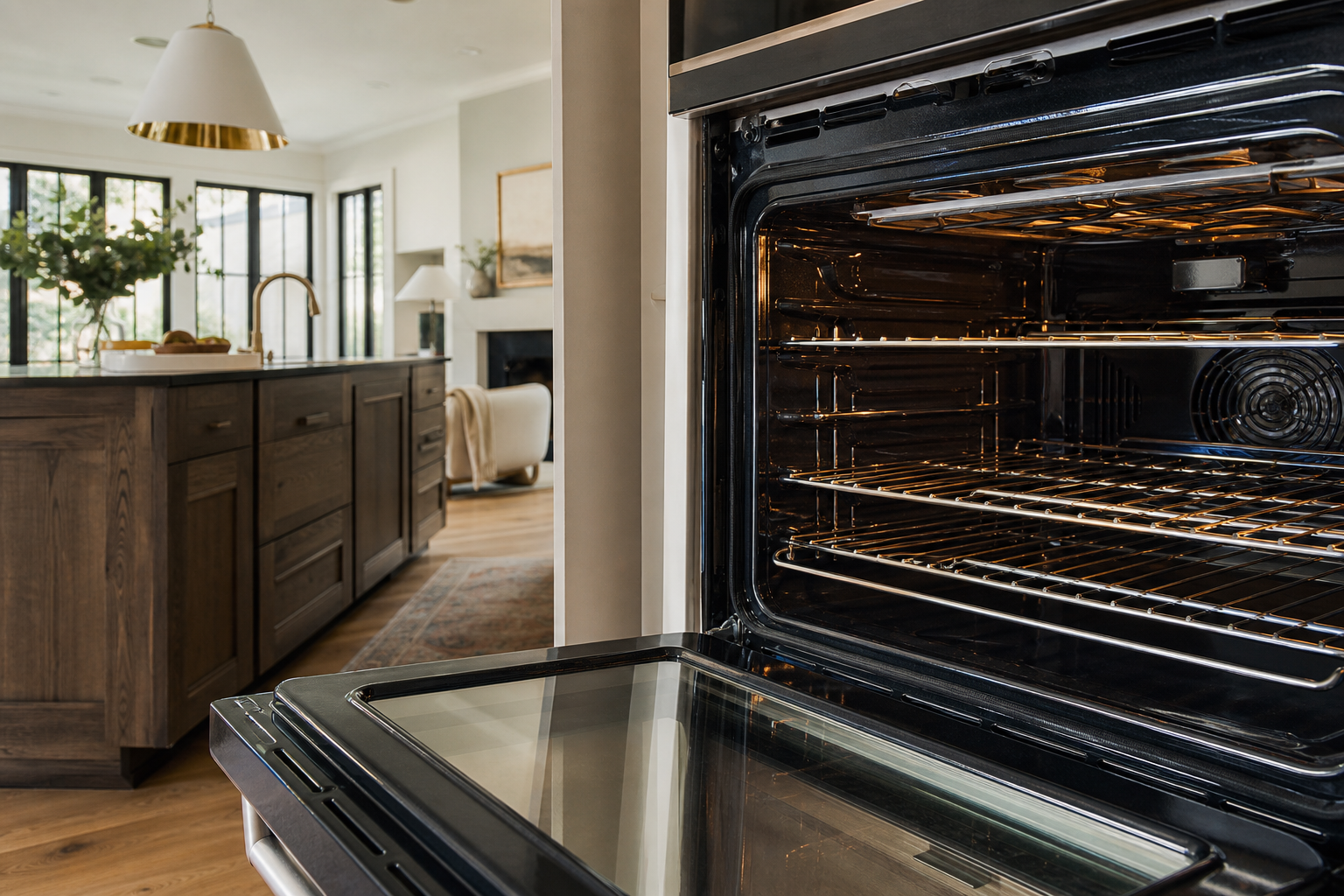
Knowing how to clean an oven without harsh chemicals is a superpower for the modern homeowner. It saves money, protects your health, and keeps your kitchen smelling like a home rather than a chemical plant. By using the baking soda and vinegar method, leveraging the power of citrus, and staying on top of spot cleans, you can maintain a showroom-ready kitchen without ever touching a bottle of toxic spray. Take back your weekend and enjoy the Beltline—let the baking soda do the work while you're out enjoying the city.
Frequently Asked Questions
Q.How often should I clean my oven using these natural methods?
For most Atlanta households that cook 3-4 times a week, a deep natural clean every 3 to 6 months is ideal. However, if you do a lot of roasting or baking that causes splatters, you might want to perform a quick lemon steam clean once a month to prevent heavy carbon buildup.
Q.Can I use the self-cleaning cycle instead of baking soda?
While convenient, the self-cleaning cycle heats the oven to extremely high temperatures (up to 900°F), which can produce dangerous fumes and even damage the oven's electronic components. Natural cleaning is much safer for the longevity of your appliance and the air quality in your home.
Q.Is it safe to use these methods on a convection oven?
Yes, natural methods are safe for convection ovens, but you must be extra careful not to get any paste or liquid inside the convection fan assembly. Focus your cleaning on the floor, walls, and door glass, keeping a safe distance from the fan intake.
Q.Why does my oven still smell like vinegar after cleaning?
The vinegar scent is temporary and usually dissipates within an hour. If it bothers you, simply leave the oven door open for 20 minutes after cleaning or run the oven at a low temperature (200°F) for 10 minutes with a window open to help the scent evaporate quickly.
Q.Will baking soda scratch my stainless steel oven exterior?
Baking soda is mildly abrasive, so avoid using it on the exterior stainless steel surfaces. For the outside of your oven, stick to a microfiber cloth and a dedicated stainless steel cleaner or a simple mixture of water and a drop of dish soap to maintain that polished Atlanta glow.
Ready for a Cleaner Home?
Get a free quote from Fuego Fresh Cleaning Services today. Background-checked, fully insured, ridiculously detail-focused.
Comments
Loading comments…