
How to Clean Stainless Steel Appliances: The Ultimate Atlanta Homeowner’s Guide
Tired of stubborn fingerprints and Atlanta humidity ruining your kitchen's shine? Discover the professional secrets to maintaining flawless stainless steel appliances year-round.

Master the Shine: How to Clean Stainless Steel Appliances Like an Atlanta Pro
There is nothing quite like the sleek, modern aesthetic of a kitchen outfitted with high-end stainless steel. Whether you are prepping a Sunday dinner in a historic bungalow in Virginia-Highland or hosting a cocktail hour in a glass-walled high-rise overlooking Buckhead, those shimmering surfaces set the tone for your entire home. However, as any local knows, maintaining that luster in the heart of Georgia is a challenge. Between the oily fingerprints of busy families and the invisible film created by Atlanta’s notorious humidity and seasonal pollen, your appliances can quickly go from "chef’s kitchen" to "sticky mess."
If you have been wondering how to clean stainless steel appliances without leaving behind those frustrating cloudy streaks or permanent scratches, you are in the right place. At Fuego Fresh Cleaning Services, we have spent years perfecting the art of the streak-free finish in homes across the Metro area. In this guide, we will break down the chemistry, the technique, and the specific tools you need to make your kitchen look like a luxury showroom again.
The Science of Stainless: Why It Gets Dirty So Fast
To understand how to clean stainless steel effectively, you first need to understand what it actually is. Despite the name, "stainless" steel is not actually stain-proof; it is an alloy that contains chromium. This chromium reacts with oxygen in the air to form a thin, invisible layer of chromium oxide that protects the metal from rusting.
The Role of Humidity and Pollen
In Atlanta, our atmospheric conditions play a huge role in appliance maintenance. During the thick of August, high indoor humidity can cause cleaning solutions to dry unevenly, leading to foggy residues. Furthermore, during our intense spring pollen seasons, fine yellow dust can settle on surfaces; if you wipe this away with a dry cloth, you are essentially rubbing abrasive particles into the metal’s finish. This is why a strategic approach is better than a quick wipe-down.
Identifying Your Steel’s "Grain"
Just like a piece of fine wood or a steak, stainless steel has a grain. If you look closely at your refrigerator or dishwasher door, you will see tiny horizontal or vertical lines. This is the direction the metal was brushed. To clean properly, you must always move with the grain. Scrubbing against it is the fastest way to create micro-scratches that dull the finish over time.
Step-by-Step: How to Clean Stainless Steel Appliances Without Streaks
You don’t need an arsenal of harsh chemicals to get a professional result. In fact, some of the best solutions are likely already in your pantry.
1. The Pre-Clean Dusting
Before applying any liquid, use a dry, clean microfiber cloth to gently remove loose dust or pet hair. In homes near the Beltline where construction dust is common, this prevents you from dragging grit across the surface.
2. The Degreasing Phase
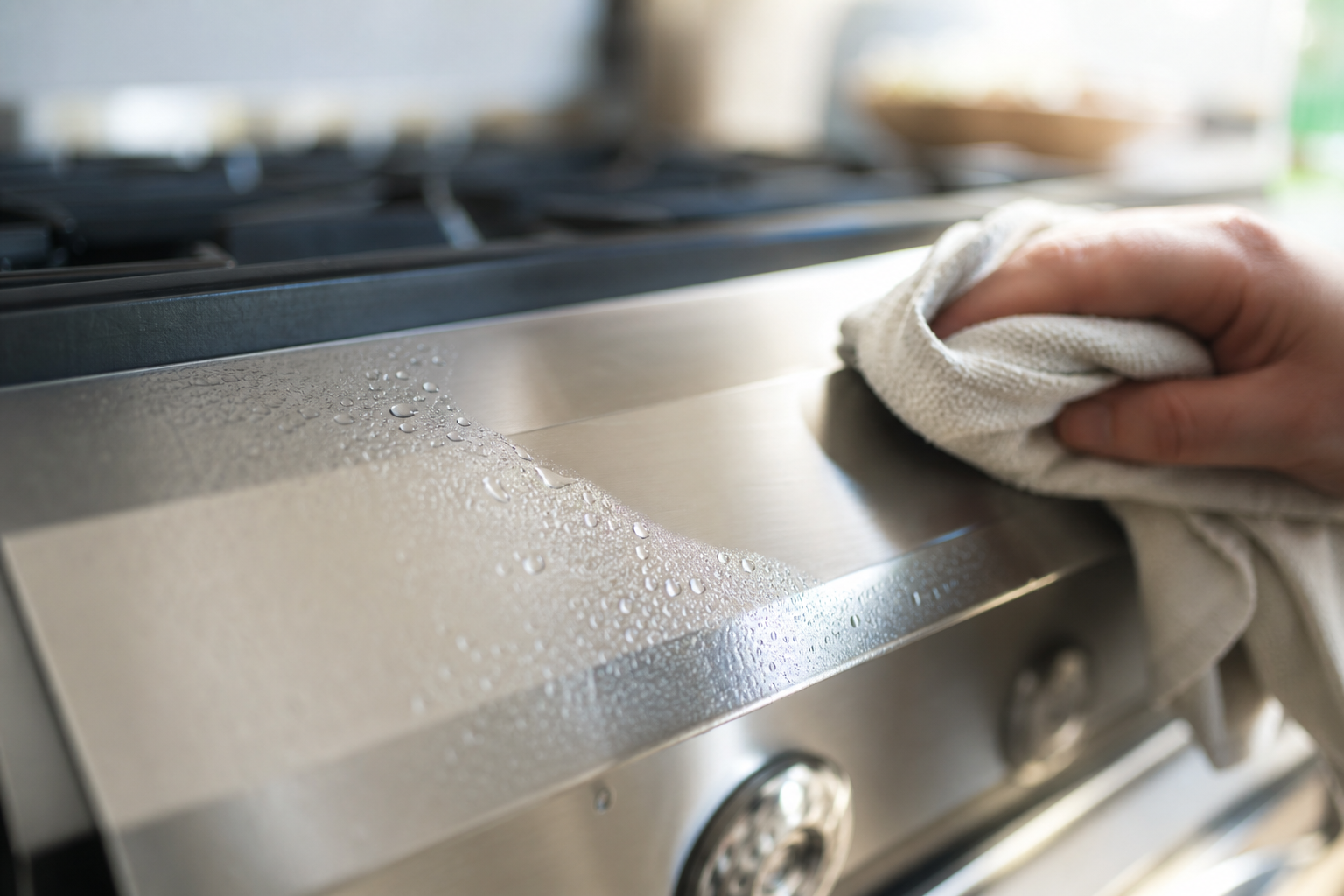
Grease is the enemy of shine. Mix a few drops of mild dish soap (like Dawn) with warm water. Using a soft cloth, wipe down the appliance in the direction of the grain. This breaks down the oils from fingerprints and cooking splatters. For tough, baked-on grease—common on oven hoods—let the soapy water sit for a minute before wiping.
3. The Vinegar Solution for Mineral Deposits
If you have hard water stains, white vinegar is your best friend. Spritz a 50/50 mixture of water and vinegar onto a cloth (not directly onto the appliance) and wipe. The acidity cuts through the minerals without damaging the metal.
4. The Buffing and Polishing Secret
Once the surface is clean and dry, it might look a bit dull. This is where the magic happens. Apply a tiny amount (we are talking a dime-sized drop) of food-grade mineral oil or a dedicated stainless steel polish to a fresh microfiber cloth. Buff it in following the grain. This fills in the microscopic pores of the metal, making it harder for fingerprints to stick in the future.
Expert Cleaning Tips for Specific Appliances
Each appliance in your kitchen faces different types of grime. A refrigerator in a Sandy Springs home with three kids needs a different approach than a professional-grade range in a Midtown penthouse.
Refrigerators and Dishwashers
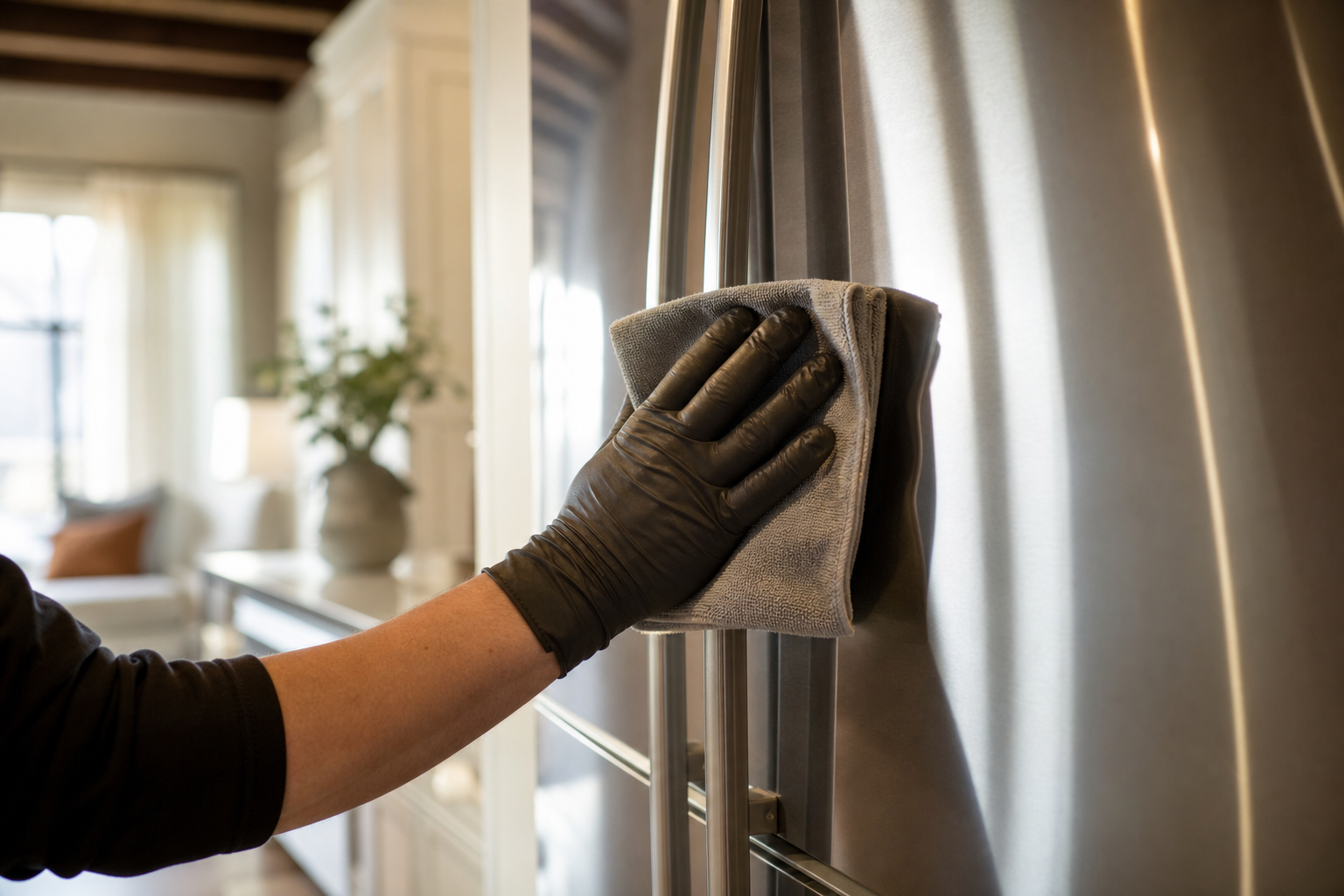
These are the high-traffic zones. To keep them looking fresh between deep cleans, focus on the handles. We recommend using a dedicated stainless steel microfiber cloth which has a tighter weave. Check our services to see how we incorporate these high-performance tools into our routine.
Ovens and Cooktops
Heat changes the way grime behaves. When oils are heated and cooled repeatedly, they polymerize, turning into a sticky, yellow film. You may need a specialized non-abrasive cream cleanser for these areas. Always ensure the appliance is completely cool before cleaning to avoid "burning" the cleaning agent onto the metal.
Common Mistakes to Avoid
When homeowners try to figure out how to clean stainless steel appliances on their own, they often reach for the wrong tools. Avoid these three common pitfalls:
- Steel Wool and Brushes: Never, under any circumstances, use steel wool or abrasive scrubbing pads. They will permanently scratch the surface and strip away the protective chromium oxide layer, eventually leading to rust.
- Bleach and Ammonia: These chemicals are too harsh for stainless steel. They can cause "pitting" or dark discolorations that are impossible to remove.
- Glass Cleaner with Ammonia: While Windex is a classic, the versions containing ammonia can leave a blue tint or streaks on stainless steel if not buffed out perfectly.
When to Hire a Professional
Sometimes, the buildup is too much for a Saturday morning DIY project. If you have just moved into a new home in Decatur and the previous owners left the appliances in a state of neglect, or if you are preparing your home for a high-stakes listing in Inman Park, a professional touch makes all the difference.
What Does Professional Cleaning Cost in Atlanta?
Professional cleaning rates vary based on the size of your home and the depth of service required. In the Metro Atlanta area, you can generally expect a professional deep clean—which includes specialized appliance detailing—to range from $150 to $450. Factors like the square footage of your kitchen and the number of appliances will influence the final pricing.
At Fuego Fresh, we don't just wipe surfaces; we restore them. Our technicians are trained to identify different types of finishes and apply the exact pH-balanced solutions needed to achieve that "mirror" look without damaging your expensive investments.
Maintaining the Glow
The secret to lasting shine is consistency. After you’ve mastered how to clean stainless steel appliances, try to do a quick "wipe and buff" once a week. This prevents the heavy grease buildup that makes cleaning such a chore.
If your life is too busy to worry about the direction of the grain or the latest mineral oil buffing techniques, we are here to help. Whether you are in the heart of Old Fourth Ward or the suburbs of Alpharetta, Fuego Fresh brings a premium, detail-oriented approach to every home we touch. Let us handle the smudges so you can get back to enjoying your beautiful Atlanta home.

Frequently Asked Questions
Q.Can I use olive oil to polish my stainless steel appliances?
While olive oil provides a temporary shine, it is an organic fat that can go rancid and become sticky over time, actually attracting more dust. We recommend using food-grade mineral oil or a specialized silicone-based stainless steel polish for a longer-lasting, non-stick finish.
Q.How do I remove hard water spots from my fridge in Atlanta?
Atlanta water is relatively soft, but mineral buildup can still occur around water dispensers. Use a cloth dampened with a mixture of 50% white vinegar and 50% distilled water to gently dissolve the calcium deposits, then dry immediately to prevent new spots.
Q.Why does my stainless steel look cloudy after cleaning?
Cloudiness is usually caused by using too much cleaning product or failing to buff the surface dry. In Atlanta's high humidity, cleaning solutions stay wet longer; ensure you use a fresh, dry microfiber cloth to buff the surface in the direction of the grain until all moisture is gone.
Q.Is it safe to use Windex on stainless steel?
Standard Windex containing ammonia can be harsh and often leaves streaks. If you must use a glass cleaner, choose an ammonia-free version, but the best results will always come from a dedicated stainless steel cleaner or a simple dish soap and water solution followed by a polish.
Q.How often should I professionally clean my appliances?
For most Atlanta households, a professional deep clean every 3 to 6 months is ideal to remove polymerized grease and restore the factory shine. This is especially important for high-use kitchens in areas like Buckhead or Brookhaven where entertaining is frequent.
Ready for a Cleaner Home?
Get a free quote from Fuego Fresh Cleaning today. Background-checked, fully insured, ridiculously detail-focused.
Comments
Loading comments…