
The Ultimate Guide: How to Clean Windows with Coffee Filters for a Streak-Free Shine
Discover why Atlanta homeowners are ditching paper towels for coffee filters to achieve a streak-free, professional window shine even during the peak of Georgia's pollen season.

The Ultimate Guide: How to Clean Windows with Coffee Filters
If you live in a sun-drenched bungalow in Virginia Highland or a modern high-rise overlooking the Downtown Atlanta skyline, you know the struggle of keeping glass clear. Between the notorious Georgia pollen season that turns every surface yellow and the relentless humidity that makes traditional cleaning a smeary mess, finding a method that actually works is a local obsession. You have probably tried everything: expensive squeegees, microfiber cloths that leave tiny fuzzies, and the old newspaper trick that leaves ink all over your hands.
But there is a better way. If you want to know how to clean windows with coffee filters, you are about to discover the best-kept secret in the professional cleaning world. Coffee filters are the unsung heroes of glass maintenance, offering a lint-free, scratch-resistant, and incredibly affordable alternative to traditional supplies. In this guide, we will walk you through the science of why this works, the exact step-by-step process, and how to tackle the unique environmental challenges we face here in Metro Atlanta.
Why Coffee Filters Beat Paper Towels Every Time
It sounds unconventional, but once you try it, you will never go back to Bounty. Most people reach for paper towels, but paper towels are engineered to be absorbent by using loose wood fibers. When those fibers get wet and rub against glass, they break off, leaving behind that annoying white lint that glows whenever the afternoon sun hits your windows in Buckhead.
The Science of Lint-Free Glass
Coffee filters are made from a high-quality, pressed paper that is designed to stay intact even when saturated with boiling water. This means they don't pill or shred. When you use them on glass, they glide across the surface, picking up debris without depositing anything new. This is the foundation of a true "streak-free" finish.
Eco-Friendly and Budget-Conscious
In a city like Atlanta, where we value both our lush canopy and our wallets, coffee filters are a win-win. A pack of 100 filters costs less than a single roll of premium paper towels. Furthermore, because they are made of thin, biodegradable paper, they have a smaller environmental footprint than synthetic microfiber cloths that eventually shed microplastics into our local waterways like the Chattahoochee.
Preparing Your Solution for Atlanta Windows
You cannot just use water. Atlanta's humidity means that if your solution doesn't evaporate at the right speed, you'll end up with water spots. We recommend a simple, professional-grade DIY mixture that cuts through city grime and tree sap.
The Perfect DIY Window Cleaner Recipe
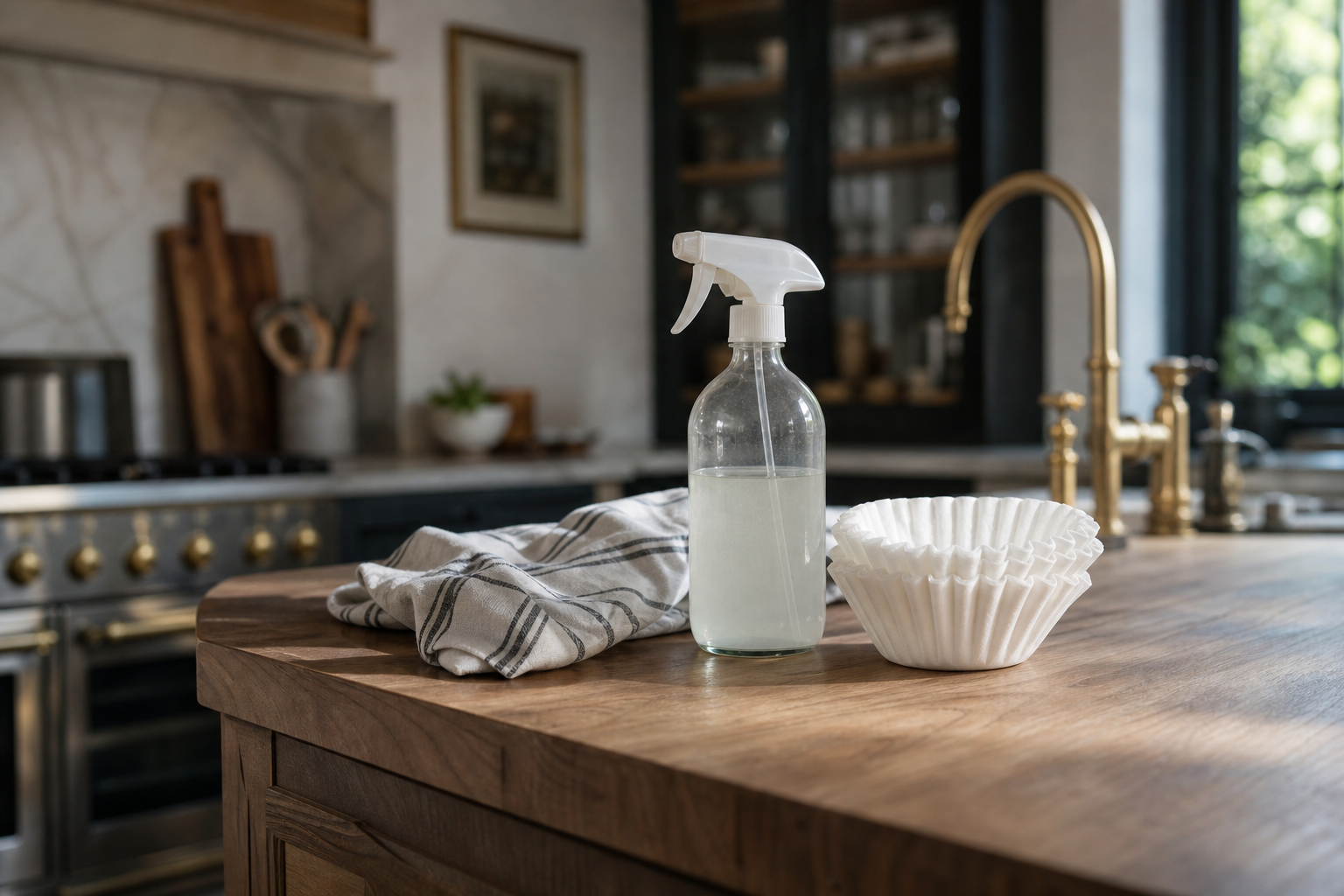
Mix the following in a clean spray bottle:
- 2 cups of distilled water (tap water in Georgia can be slightly hard, leading to mineral deposits).
- 1/2 cup of white vinegar (the acid cuts through the sticky pollen residue).
- 1 tablespoon of cornstarch (this is the secret ingredient that acts as a mild abrasive for bird droppings).
Why Vinegar is Essential for Georgia Homes
Whether you are in a historic home in Inman Park or a new build in Alpharetta, vinegar is your best friend. It breaks down the oils from fingerprints and the smog film that accumulates near the Connector. When combined with the texture of a coffee filter, it creates a chemical-mechanical duo that is hard to beat.
Step-by-Step: How to Clean Windows with Coffee Filters
Now that you have your supplies, it is time to get to work. Timing is everything—never clean your windows in the direct midday sun, or the solution will dry before you can wipe it, leaving streaks.
Step 1: The Dry Dusting
Before you spray anything, take a dry coffee filter and wipe down the window frame and the glass. In Atlanta, this is crucial for removing loose pollen and dust. If you spray liquid directly onto a pollen-heavy window, you’ll just be creating a muddy paste. View our full service list to see how we handle deep exterior cleans.
Step 2: The Controlled Spray
Lightly mist the glass. You don't need to soak it. Start from the top and work your way down. If you are cleaning large floor-to-ceiling windows common in Midtown condos, work in sections to ensure the solution stays wet until you're ready to wipe.
Step 3: The S-Pattern Wipe
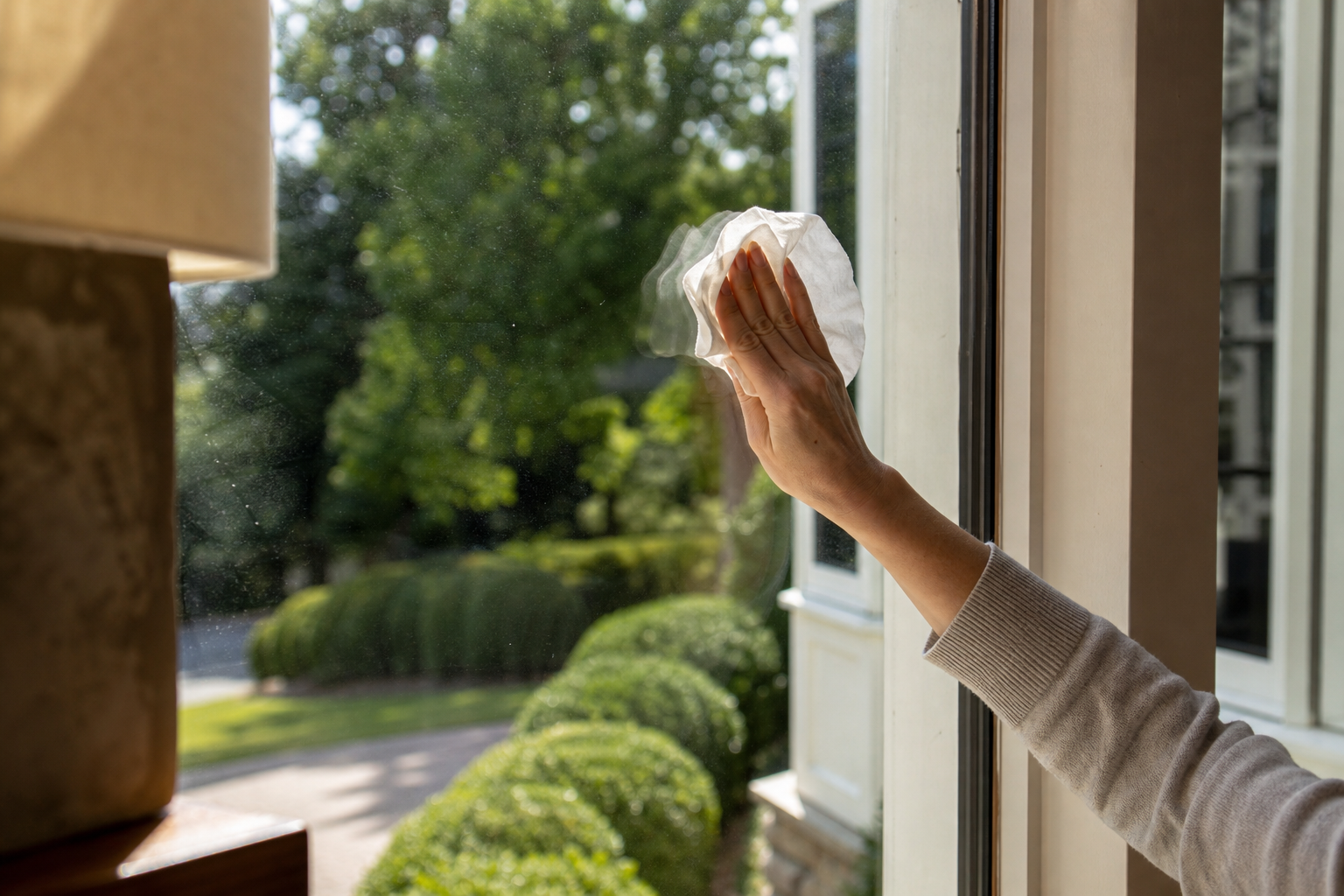
Fold your coffee filter into a manageable square. Starting at the top left corner, wipe across to the right, then drop down and wipe back to the left in a continuous "S" motion. This prevents you from pushing dirt back onto areas you've already cleaned. Change filters frequently; as soon as one gets damp and limp, toss it and grab a fresh one.
Expert Cleaning Tips for Atlanta Residents
Living in the "City in a Forest" presents unique challenges. Here are a few pro tips to keep your glass pristine between professional visits:
- Tackle the Sills First: Use a vacuum attachment to clear out the tracks and sills. Atlanta insects love to hide in window tracks, and cleaning the glass first only to have wind blow dirt from the sill back onto it is frustrating.
- Buff to Perfection: Once the window is dry, take one final, bone-dry coffee filter and give the glass a quick buffing. This removes any static electricity that might attract new dust.
- Inside vs. Outside: Always use horizontal strokes on the inside and vertical strokes on the outside. This way, if you see a streak, you’ll know exactly which side of the glass it’s on.
Common Mistakes to Avoid
Even with the right tools, a few errors can ruin the result. Avoid these common pitfalls:
- Using Softened Water: If your home has a water softener, the salt content can actually leave a hazy film. Use distilled water for the final mix.
- Over-Spraying: More cleaner does not mean cleaner windows. It just means more work to remove the residue. A fine mist is all you need.
- Ignoring the Weather: Don't clean windows when a storm is rolling in off the Gulf. The high humidity will prevent the vinegar from flashing off properly.
When to Put Down the Filters and Hire a Pro
Cleaning windows with coffee filters is a fantastic weekend project for a standard-sized home, but it has its limits. If you have a two-story foyer in Marietta or a massive estate in Milton, the DIY approach can quickly become a multi-day ordeal—and a safety risk if ladders are involved.
The Cost of Professional Window Cleaning in Atlanta
For many homeowners, the time and effort aren't worth the $15-$20 in supplies. In the Metro Atlanta area, professional window cleaning services typically range from $150 to $450 depending on the number of panes, the height of the home, and whether you want interior, exterior, or both. A professional team brings high-reach equipment and industrial squeegees that can achieve in two hours what might take a homeowner two weekends. You can check our latest pricing guide for more details on residential packages.
Conclusion
Learning how to clean windows with coffee filters is a game-changer for maintaining that crisp, luxury feel in your home. It’s a low-cost, high-reward technique that handles the Atlanta elements with ease. However, when the task feels too big or you’d rather spend your Saturday walking the Beltline or exploring Ponce City Market, the experts at Fuego Fresh are here to help. Whether you need a one-time deep clean or recurring maintenance, we bring that same attention to detail to every pane of glass in your home.

Frequently Asked Questions
Q.Why do coffee filters work better than microfiber for windows?
While microfiber is great for dusting, it can often hold onto tiny particulates or oils from previous uses that lead to streaks. Coffee filters are a one-time-use, high-density paper product that is guaranteed to be lint-free and chemically neutral, providing a more consistent finish every time.
Q.Can I use coffee filters on my car windows in Atlanta?
Yes! Coffee filters are excellent for auto glass, especially for removing the hazy film that builds up on the inside of the windshield. Just be careful not to use ammonia-based cleaners if your car has aftermarket window tinting; stick to the vinegar and water solution.
Q.How often should I clean my windows in Georgia?
Due to the high pollen counts in the spring and the red clay dust in the summer, we recommend a deep clean at least twice a year—ideally in late May after the pine pollen has settled and again in November before the holidays. Monthly touch-ups on high-traffic areas like sliding glass doors are also helpful.
Q.Is it safe to use vinegar on all window types?
Vinegar is safe for most standard glass, but you should avoid getting it on stone sills (like marble or granite) or unsealed wood frames, as the acid can etch or damage those surfaces. Always spray the filter directly rather than the window if you are close to sensitive materials.
Q.What is the best time of day to clean windows in Atlanta?
Early morning or late evening is best. In the heat of a Georgia afternoon, the sun can heat the glass to high temperatures, causing your cleaning solution to evaporate instantly. This flash-drying is the primary cause of streaks and water spots.
Ready for a Cleaner Home?
Get a free quote from Fuego Fresh Cleaning Services today. Background-checked, fully insured, ridiculously detail-focused.
Comments
Loading comments…