
How to Use Vinegar in Laundry to Remove Odors: The Atlanta Homeowner’s Guide
Discover the science-backed secrets to eliminating stubborn mildew and sweat smells from your wardrobe using simple white vinegar, tailored for the unique Atlanta climate.
How to Use Vinegar in Laundry to Remove Odors: The Atlanta Homeowner’s Guide
If you have ever spent a July afternoon walking the Beltline or navigating the humidity in Midtown, you know the struggle of "Atlanta funk." Between the suffocating summer humidity and the thick coating of yellow pollen that invades every fiber of our clothing, regular detergent often falls short. You pull your favorite workout shirt out of the dryer only to realize it still smells faintly of a hot afternoon at Piedmont Park. The solution isn't more expensive chemical fragrances; it is a staple already sitting in your pantry. Learning how to use vinegar in laundry to remove odors is the ultimate game-changer for keeping your wardrobe as fresh as a morning in Buckhead.
In this guide, we will break down exactly why white distilled vinegar is the secret weapon for Georgia households, how to apply it to different fabrics, and when it is time to call in the pros at Fuego Fresh Cleaning to handle the deep cleaning of your home so you can focus on your life.
Why Vinegar is Essential for Atlanta Laundry
Atlanta’s climate presents two specific challenges for laundry: high humidity and mineral-heavy water. When moisture lingers in the air, clothes take longer to dry, leading to that sour, mildewy smell. Additionally, the minerals in our local water can trap detergent residue and body oils inside the fabric fibers.
The Science of Acidity
White distilled vinegar is roughly 5% acetic acid. This mild acidity acts as a natural solvent. It breaks down the uric acid and proteins found in sweat and dissolves the alkaline film left behind by traditional detergents. By stripping away this buildup, the vinegar allows odors to actually escape the fabric rather than being masked by synthetic scents.
Softening Without the Gunk
Unlike commercial fabric softeners that coat your clothes in a waxy layer—which actually traps bacteria and smells over time—vinegar naturally softens the water and the fibers. This is particularly important for residents in areas like Old Fourth Ward or Inman Park, where older plumbing can sometimes contribute to stiff, dingy linens.
Step-by-Step: How to Use Vinegar in Laundry to Remove Odors
Successfully removing odors requires the right timing and the right amount. You cannot just pour a gallon in and hope for the best. Follow these specific methods for the best results.
The Rinse Cycle Method
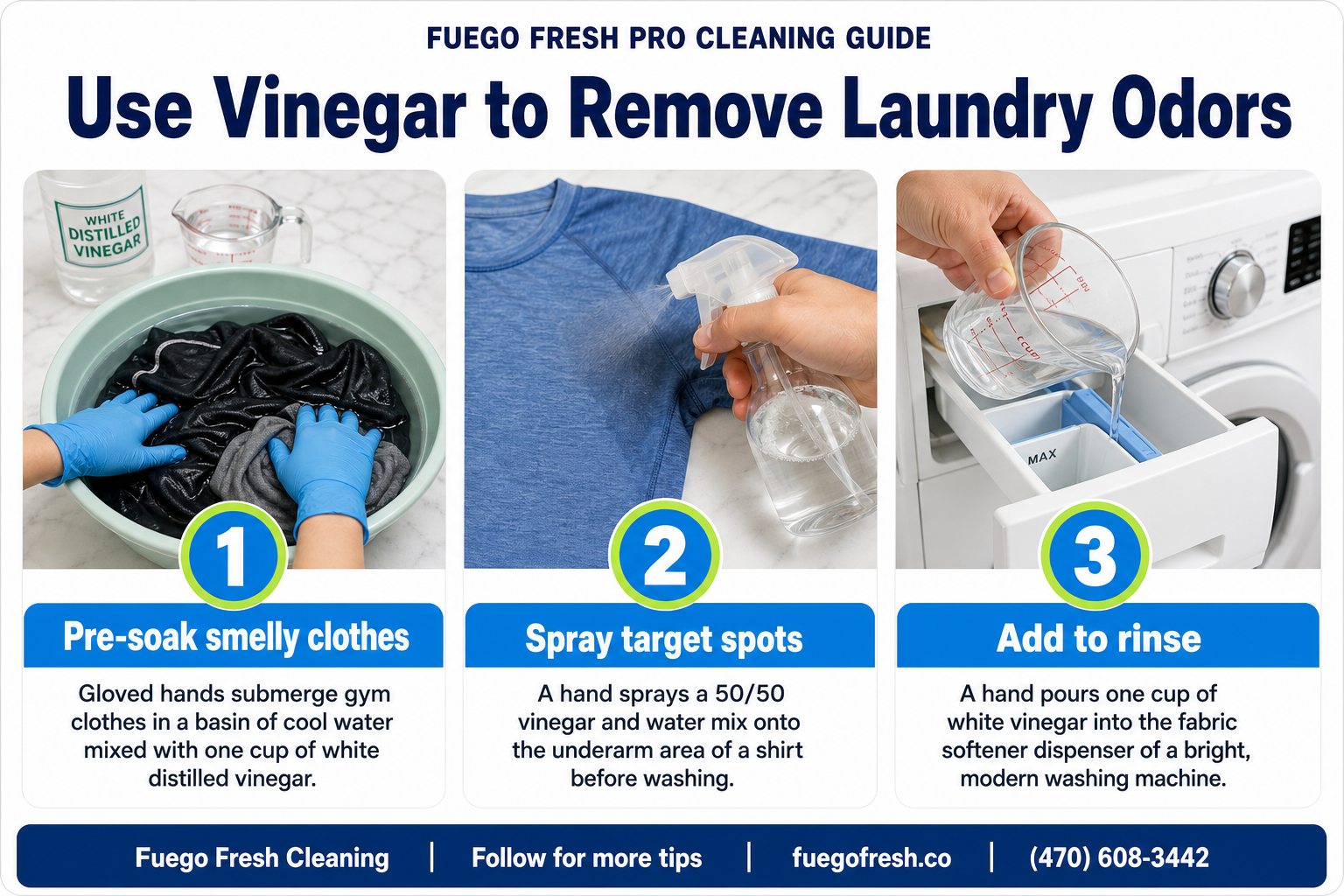
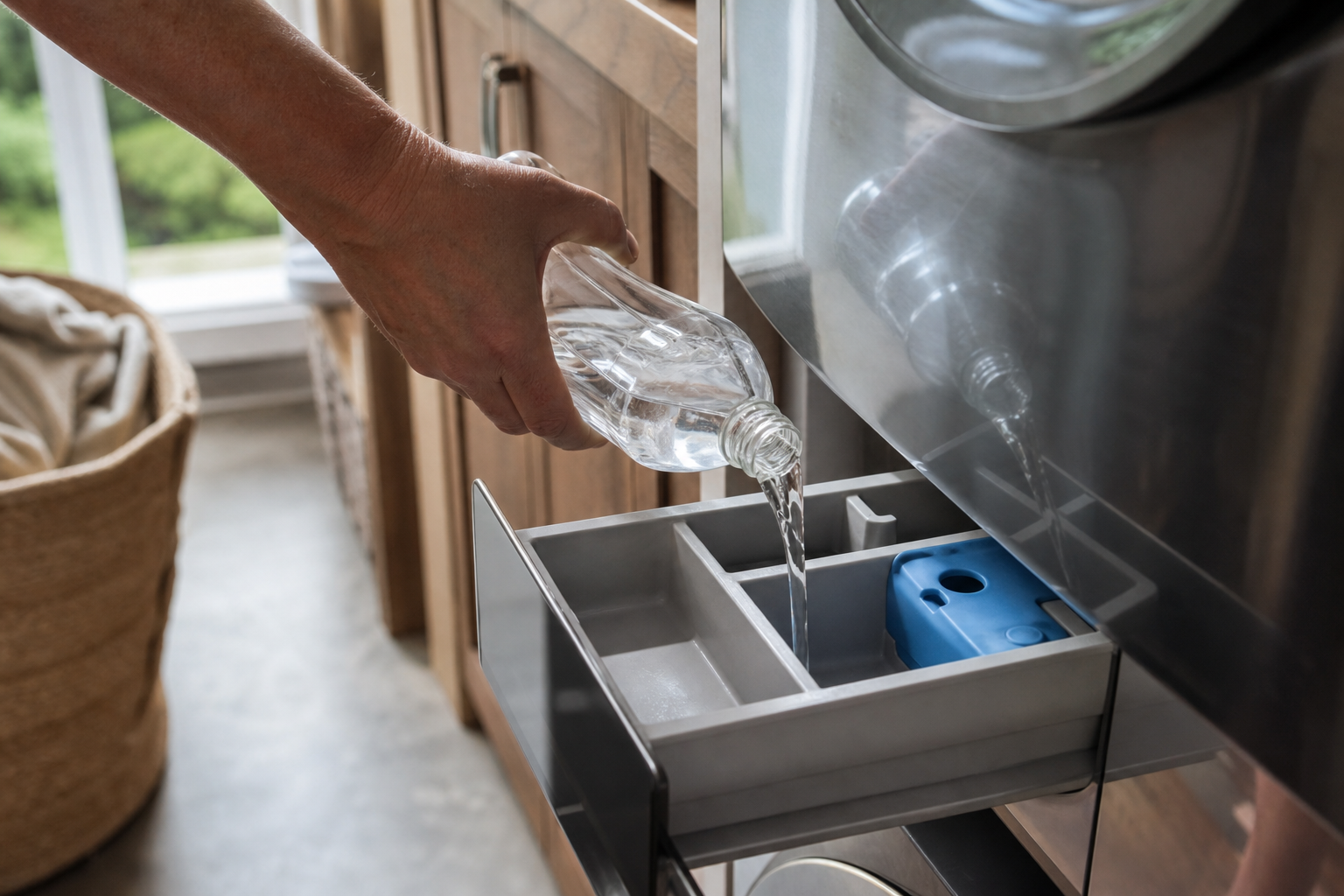
For general freshness, the best time to add vinegar is during the final rinse cycle. When your machine reaches the rinse stage, add 1/2 cup to 1 cup of white distilled vinegar to the fabric softener dispenser. If your machine doesn't have a dispenser, wait for the rinse cycle to fill with water and pour it in manually. This ensures the acid neutralizes any remaining soap and leaves the clothes smelling neutral.
The Pre-Soak for Tough Smells
If you have gym clothes that have sat in a bag after a session at a Decatur CrossFit, or towels that have developed a permanent "sour" scent, a pre-soak is necessary.
- Fill a basin or your washer with cool water.
- Add 1 cup of white vinegar.
- Submerge the items and let them sit for 30 to 60 minutes.
- Wash as usual with a minimal amount of high-quality detergent.
Targeting Underarm Stains and Odors
For specific spots that won't quit smelling like deodorant and sweat, create a 50/50 mix of water and vinegar in a spray bottle. Spritz the armpits or necklines of your shirts before tossing them in the hamper. This gives the vinegar time to break down the enzymes before the wash even starts.
Dealing with the "Atlanta Pollen" and Mildew
We all know "The Pollening." That window in spring where everything turns yellow. Pollen is sticky and biological; it clings to clothes and can cause allergic reactions if not fully removed.
Stripping Pollen and Allergens
Adding vinegar to your wash helps dissolve the sticky resins in pine and oak pollen. This is especially helpful for bedding. If you have been keeping your windows open in Virginia-Highland to catch a breeze, your curtains and linens are likely compromised. A vinegar rinse ensures those particles are washed away rather than redeposited.
Rescuing Sour Towels
Towels are the biggest culprits for odors in Georgia’s humidity. If your towels smell bad even after they are clean, run them through a wash cycle with only one cup of vinegar and hot water—no detergent. Then, run them a second time with a half-cup of baking soda. This "stripping" process removes the years of buildup that trap bacteria.
Expert Cleaning Tips for Laundry Success
To maximize the power of vinegar, keep these professional tips in mind:
- Never Mix with Bleach: This is the golden rule. Mixing vinegar and bleach creates toxic chlorine gas. Always choose one or the other.
- Use White Distilled Only: Never use apple cider or balsamic vinegar. The sugars and colorings in these can actually stain your clothes and attract more bacteria.
- Temperature Matters: For synthetic athletic wear (common in Brookhaven and Sandy Springs), use cool water with your vinegar. High heat can damage the elasticity of spandex while trapping the vinegar-loosened oils back into the fiber.
- Sun Dry When Possible: If you have a backyard in Kirkwood or a balcony in a high-rise, letting your vinegar-rinsed clothes dry in the sun provides a secondary UV punch to kill odor-causing bacteria.
Common Mistakes to Avoid
While vinegar is a miracle worker, it isn't meant for every situation. Here is where homeowners often go wrong:
- Overusing the Acid: Using too much vinegar too often can potentially degrade the rubber seals and hoses in your washing machine over several years. Stick to the recommended 1/2 cup per load.
- Using it on Delicate Silks: Vinegar is an acid. While mild, it can be too harsh for fine silks or certain delicate lace. Always spot-test a small area first.
- Forgetting to Clean the Machine: Sometimes the odor isn't your clothes; it’s the washer. Front-loaders in humid climates like ours are prone to mold. Once a month, run an empty hot cycle with two cups of vinegar to kill spores in the drum.
When to Hire a Professional
Managing a household in a bustling city like Atlanta is a full-time job. Between traffic on the Connector and a busy career, spending your weekends deep-cleaning laundry and scrubbing baseboards is exhausting.
If you find that your home feels perpetually "behind" or you can't seem to get that fresh-house smell despite your best efforts with vinegar, it might be time for professional help. Professional cleaning services provide a level of sanitation that DIY methods simply can't reach. In the Metro Atlanta area, professional residential cleaning typically ranges from $150 to $450 depending on the square footage and the depth of the clean. Investing in a recurring service means you get to enjoy your home rather than working in it.
Check out our pricing guide to see how affordable it is to get your weekends back and keep your Atlanta home in pristine, odor-free condition.
Frequently Asked Questions
Q.Will my clothes smell like salad dressing if I use vinegar?
No, the vinegar scent completely dissipates once the clothes are dry. During the wash, you might smell a slight tang, but once the rinse cycle finishes and the items go through the dryer or air-dry, the acetic acid evaporates, leaving only a neutral, clean scent.
Q.Can I use vinegar in my high-efficiency (HE) washer in Atlanta?
Yes, vinegar is safe for HE machines, but you should pour it into the fabric softener compartment rather than directly onto the clothes. This ensures it is dispensed at the correct time during the rinse cycle, preventing it from being washed away too early by the concentrated HE soap.
Q.How often should I use vinegar to remove odors from my gym clothes?
For high-performance athletic gear used in Georgia's humidity, we recommend a vinegar rinse every 3-4 washes. Over time, synthetic fabrics like polyester trap body oils (sebum) that regular detergent can't reach, and a periodic vinegar soak prevents that permanent 'locker room' smell from setting in.
Q.Is vinegar safe for my septic system in suburban Atlanta?
Absolutely. Unlike harsh chemical bleaches or synthetic fragrances, white distilled vinegar is biodegradable and septic-safe. It neutralizes pH levels in your waste water, which can actually be beneficial for the bacterial balance in your septic tank compared to heavy alkaline detergents.
Q.What is the best way to get rid of the 'wet dog' smell from Atlanta rain?
When your dog comes in from a rainy walk in Grant Park, their bedding and your towels take a hit. Wash these items immediately using the 'Pre-Soak' method: 1 cup of vinegar in a bucket of warm water for 30 minutes, followed by a normal wash cycle with an extra rinse. This breaks down the organic proteins found in pet dander and damp fur.
Ready for a Cleaner Home?
Get a free quote from Fuego Fresh Cleaning today. Background-checked, fully insured, ridiculously detail-focused.
Comments
Loading comments…