
Viral Tinfoil in Dishwasher Hack Explained: The Atlanta Homeowner's Guide to Sparkling Silverware
Discover why Atlanta residents are putting aluminum foil in their dishwashers to combat dull silverware and how this simple chemical reaction works in our local water.

The Viral Tinfoil in Dishwasher Hack Explained: Does It Actually Work for Atlanta Homes?
You’ve seen it on your TikTok feed between clips of the Beltline and reviews of the newest West Midtown brunch spot: someone rolls up a ball of aluminum foil, tosses it into the cutlery basket of their dishwasher, and magically, their silverware emerges looking like it belongs in a Buckhead mansion. But is this just another internet myth, or is there legitimate science behind it?
Today, we have the viral tinfoil in dishwasher hack explained from a professional perspective. If you’ve been frustrated by dull, tarnished spoons or cloudy forks after a standard cycle, you aren't alone. Between the high humidity in Georgia and the specific mineral content of Metro Atlanta’s water supply, keeping stainless steel and silver sparkling can be a genuine chore. In this guide, we will break down the chemistry, the execution, and the limitations of this viral trend.
Understanding the Problem: Why Does Silverware Get Dull?
Before we dive into the solution, we have to look at the culprit. Most modern flatware is made of stainless steel, but even high-quality sets can suffer from "tarnish" or a dulling film.
The Role of Ion Exchange
In a dishwasher, heat and moisture accelerate a process called oxidation. When sulfur in food particles or chemicals in your detergent react with the metal, it creates a layer of tarnish. This is especially prevalent in older homes in neighborhoods like Virginia-Highland or Inman Park, where older plumbing might introduce different metallic ions into the wash cycle.
Hard Water vs. Atlanta Water
While Atlanta isn't known for the extremely hard water found in the Southwest, our water does contain minerals that can leave behind a cloudy residue. This residue acts like a magnet for food particles, making your silverware look aged and greasy even if it's technically "clean."
The Science: How the Tinfoil Hack Works
So, why does a ball of foil change anything? It isn’t about the foil scrubbing the dishes—it's about a chemical process called ion exchange.
The Sacrificial Anode
The aluminum foil acts as a "sacrificial anode." In the presence of the hot water and the chemicals in your dishwasher detergent (which act as an electrolyte), a small electrical charge is created. The tarnish on your silverware wants to move toward the aluminum. Essentially, the sulfur and oxygen that make your forks look dull jump off the silverware and onto the aluminum foil.
Why This Isn't "Cleaning"
It is important to understand that the viral tinfoil in dishwasher hack explained is a polishing hack, not a scrubbing hack. The foil doesn't remove stuck-on grits of dried oatmeal from your breakfast in Morningside; it simply reverses the chemical dullness of the metal itself.
Step-by-Step: How to Execute the Hack Properly
If you want to try this at home, you need to do it correctly to avoid damaging your appliance or your dishes.
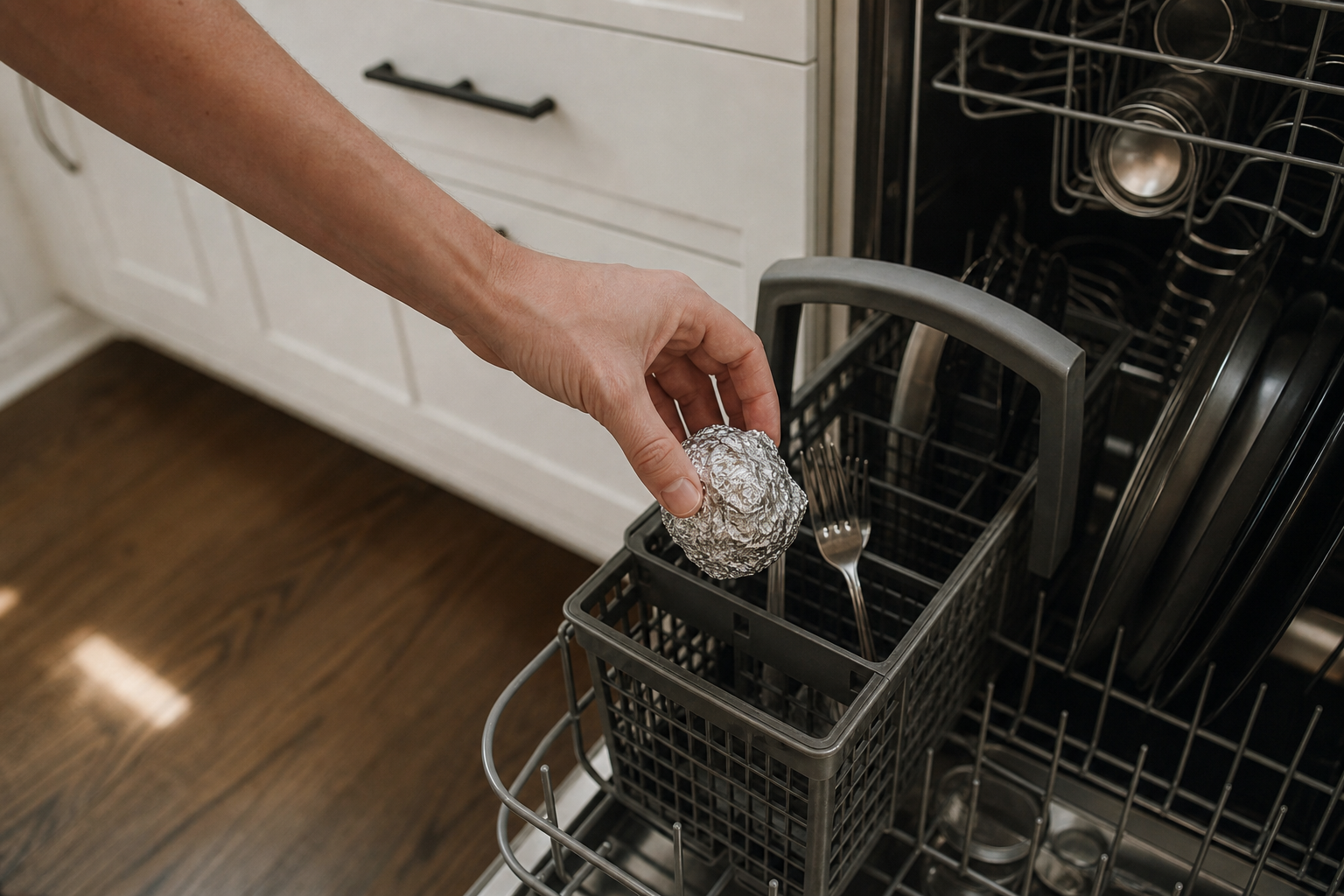
- Prepare the Foil: Tear off a piece of standard aluminum foil about the size of a sheet of paper.
- Crumple, Don't Compress: Roll it into a ball about the size of a golf ball. Don't pack it too tightly; you want plenty of surface area exposed to the water.
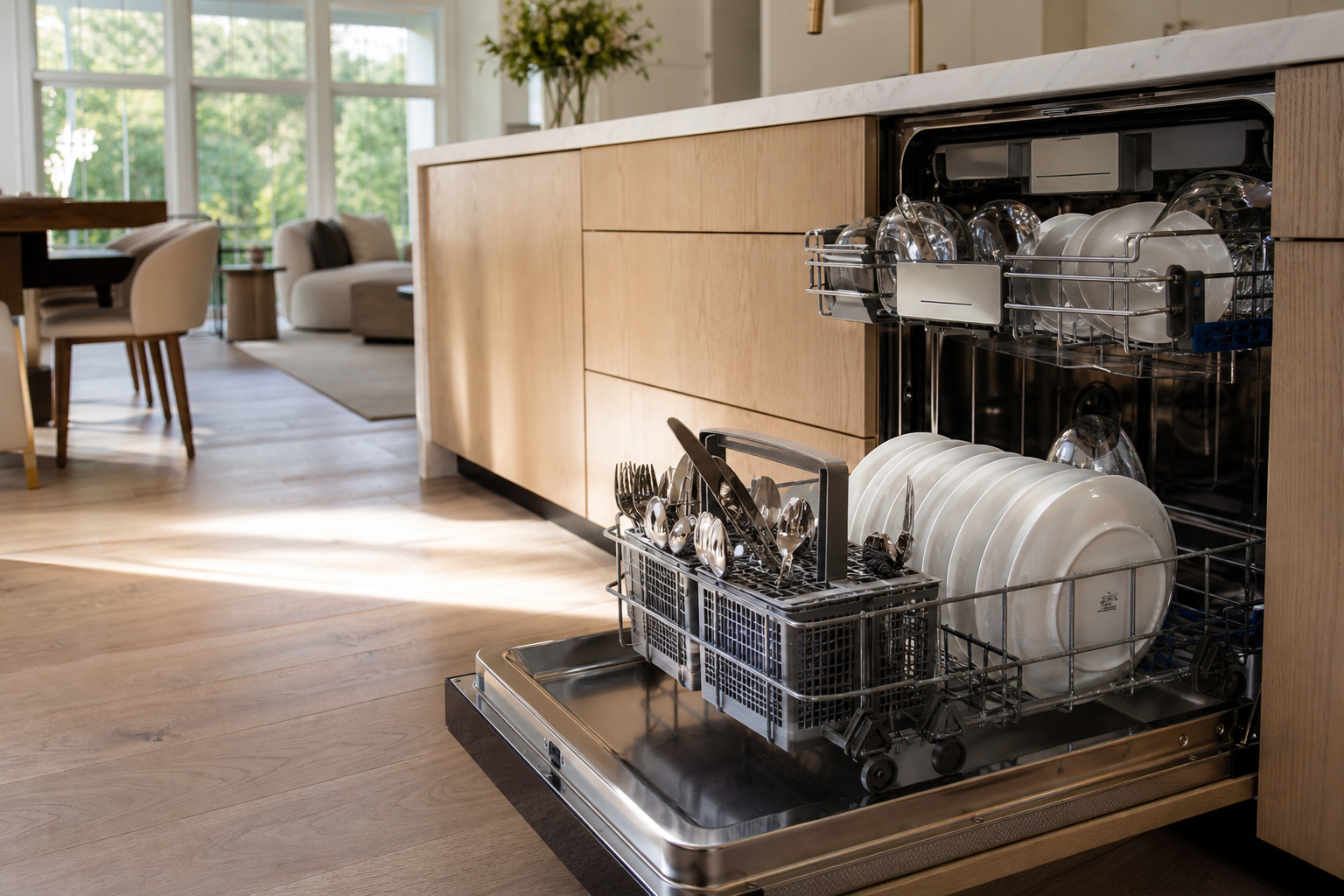
- Placement is Key: Place the ball in the cutlery basket. Ensure it is secure so it doesn't bounce around and get caught in the spray arms or the heating element at the bottom of the machine.
- Run a Standard Cycle: Use your normal detergent. There is no need for special additives, though a rinse aid can help the process in the humid Atlanta climate.
The Real Costs of Kitchen Maintenance in Atlanta
While a roll of foil only costs a few dollars at the Publix in Midtown, maintaining a high-end kitchen involves more than just hacks. If your dishwasher is consistently leaving residue, you might be facing a deeper issue with your appliance's filtration system or your home's water quality.
For those who prefer to skip the DIY experiments, professional deep cleaning services offer a comprehensive solution. In the Metro Atlanta area, a professional deep kitchen sanitation and detailing typically ranges from $150 to $450, depending on the size of the kitchen and the level of buildup. This usually includes cleaning the dishwasher filter, degreasing the interior, and hand-polishing fixtures—tasks that a ball of tinfoil simply cannot handle.
Expert Cleaning Tips for a Sparking Kitchen
Beyond the tinfoil trick, there are several ways to keep your kitchen in top shape:
- Clean the Filter Regularly: Most Atlanta residents forget that dishwashers have a manual filter at the bottom. Pull it out once a month and rinse it to prevent that "old dish" smell.
- Vinegar Rinse: Once a month, run an empty cycle with a bowl of white vinegar on the top rack. This cuts through the Georgia lime and scale buildup.
- Dry Immediately: In high-humidity months, don't let the dishwasher sit closed after the cycle ends. Crack the door to let the steam escape, preventing water spots from forming as the air cools.
Common Mistakes to Avoid with the Tinfoil Hack
Even a simple hack can go wrong. Avoid these pitfalls to protect your home:
- Using Too Much Foil: A single ball is enough. Overloading the basket can block the water jets, leaving your dishes dirty.
- Using it with Silver Plate: If you have heirloom silver from a historic Druid Hills estate, be careful. This hack is best for stainless steel. Real silver or silver-plated items can sometimes react too aggressively, leading to a pitted surface.
- Neglecting the Detergent: The hack relies on the detergent to work. If you use "eco-friendly" detergents that lack certain salts or surfactants, the ion exchange might not happen effectively.
- Ignoring the Spray Arms: If the foil ball is too small, it could wash out of the basket and jam the mechanical parts of your dishwasher. Always ensure it's wedged securely.
When to Call the Professionals
Sometimes, a viral hack isn't enough to tackle the grime of a busy Atlanta lifestyle. If you've just hosted a massive dinner party after a Falcons game or you're preparing your home for sale in Cabbagetown, you need more than just shiny forks.
You should consider a professional service if you notice persistent odors, greasy film on your cabinetry, or if you simply don't have the time to manage the deep-cleaning tasks your home deserves. You can check out our services to see how we handle high-touch areas or view our pricing for a transparent look at what a professional clean costs in your neighborhood.
Conclusion
The viral tinfoil in dishwasher hack is a legitimate, science-backed way to brighten your stainless steel silverware. By utilizing a simple chemical reaction, you can achieve a high-end polish with minimal effort. However, it's just one small part of maintaining a truly clean home. For those who want their entire living space to feel as bright and fresh as a spring day in Piedmont Park, sometimes the best "hack" is bringing in an expert team to do the heavy lifting for you.
Frequently Asked Questions
Q.Does the tinfoil hack damage the dishwasher?
As long as the foil is securely placed in the cutlery basket and isn't small enough to slip through the gaps, it shouldn't damage your appliance. However, if a piece of foil gets loose, it could potentially clog the drain pump or damage the spray arm. Always ensure the ball is larger than the holes in your basket.
Q.Will this work on my grandmother's antique silver?
We recommend caution with antique or silver-plated items. While the science works, the reaction can be uneven on older plating, potentially causing spots or stripping. It is safest to use this hack primarily for modern stainless steel flatware commonly used in Atlanta households.
Q.Why does my silverware still look cloudy even with the foil?
If the tinfoil doesn't work, you likely have hard water mineral buildup rather than tarnish. Atlanta's humidity can also leave streaks if the drying cycle isn't efficient. Try adding a rinse aid or a cup of white vinegar to the wash cycle to break down mineral deposits.
Q.How often should I use the tinfoil ball?
You don't need to do this with every load. Using a fresh ball of foil once every two weeks or whenever you notice your spoons losing their luster is sufficient. Using it too frequently is simply a waste of aluminum foil.
Q.Is it better to hire a professional cleaner for my kitchen?
A professional cleaner does much more than polish silverware. We deep-clean the tracks of your dishwasher, degrease the range hood, and sanitize surfaces that DIY hacks can't reach. If you are moving or just finished a renovation in a neighborhood like Old Fourth Ward, a pro clean is highly recommended.
Ready for a Cleaner Home?
Get a free quote from Fuego Fresh Cleaning Services today. Background-checked, fully insured, ridiculously detail-focused.
Comments
Loading comments…